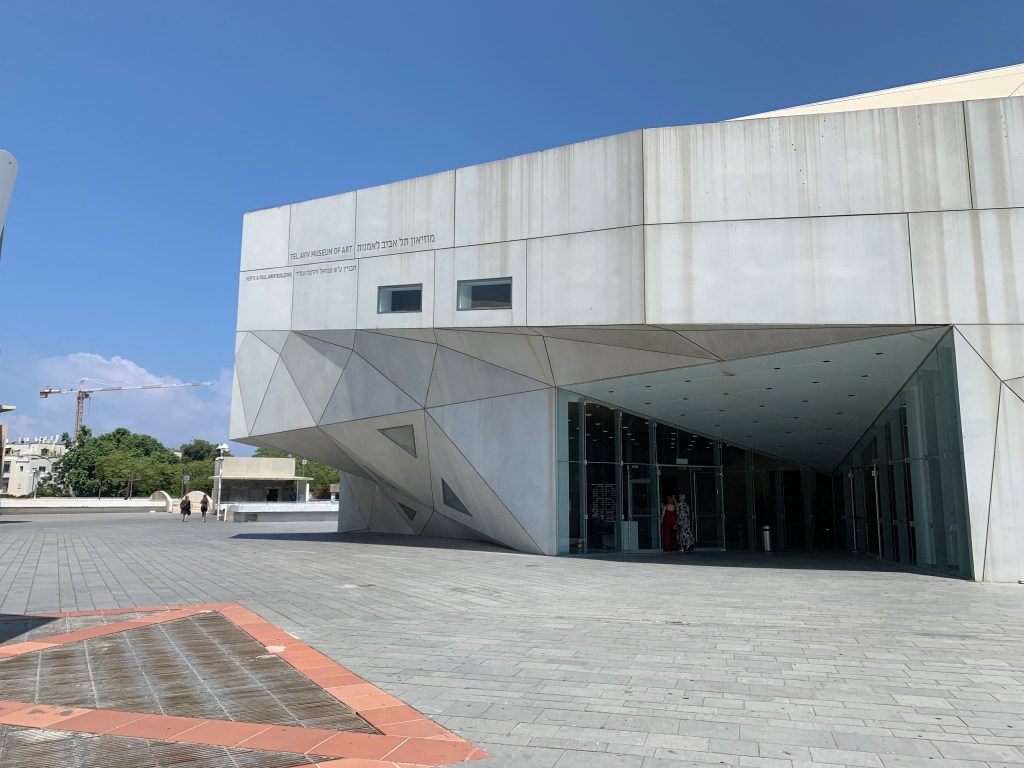
One of my favorite museums of this trip was the Tel Aviv Contemporary Art Museum. This blog post highlights some of the exhibits and art installations that particularly struck me, as well as a little draft of a poem I was inspired to write after visiting.
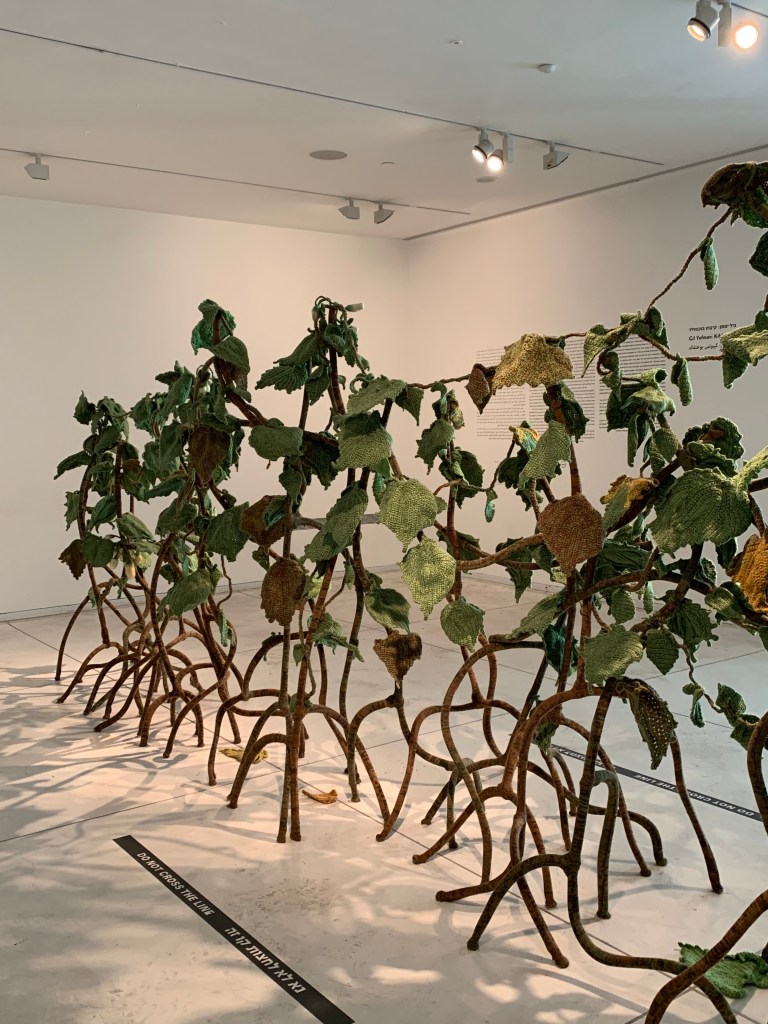
The art installation below was inspired by a letter of instruction from an SS guard member at Auschwitz to install greenery around the crematorium ovens. The letter (which I’m assuming is real) was posted near the installation, and read as follows:
6 November 1943
Objective: to assemble the plants for the purpose of providing a border of greenery for the camp’s Nos 1 and 2 crematorium ovens.
Ref: Conversation between SS-Obersturmbannführer Höss, Camp Commandant, and Sturmbannführer Bishoff.
To SS Sturmbannführer Ceasar. Head of Agricultural Services in the Concentration Camp of Auschwitz (Upper Silesia).
In conformity with an order from SS-Obersturmbannführer Höss, Camp Commandant, Nos 1 and 2 crematorium ovens in camp will be provided with a green border serving as a natural boundary to the camp.
The following is a list of the plants needed to be drawn from our stocks of trees:
200 trees in leaf from three to five meters high; 100 tree shoots in leaf from a meter and a half to four meters high; lastly, 1,000 bushes for use as lining from one to two and a half meters high, all to come from the stocks in our nurseries. You are requested to place these supplies of plants at our disposal. Head of the Central Building Directorate of the Waffen SS and the Police at Auschwitz.
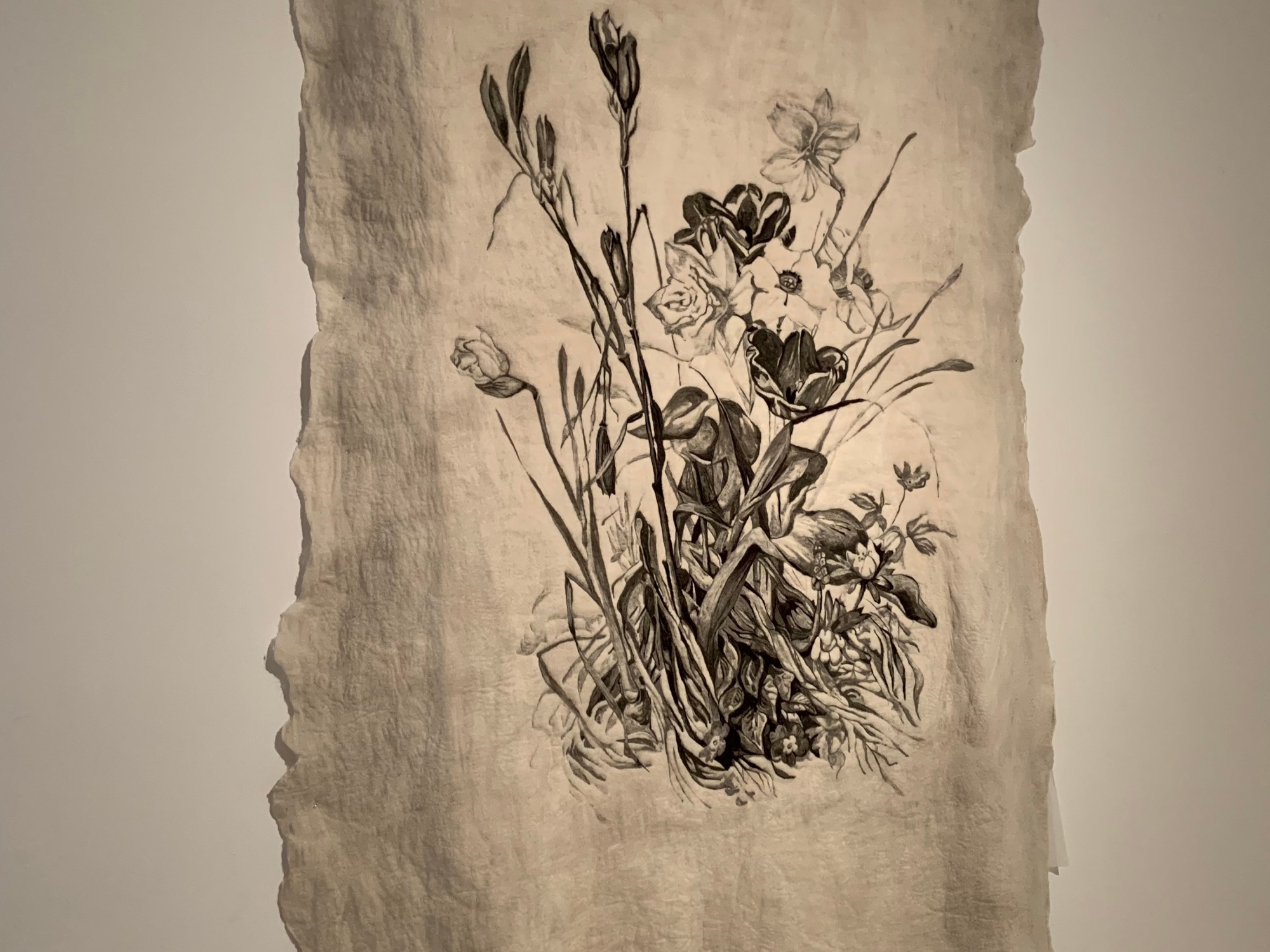
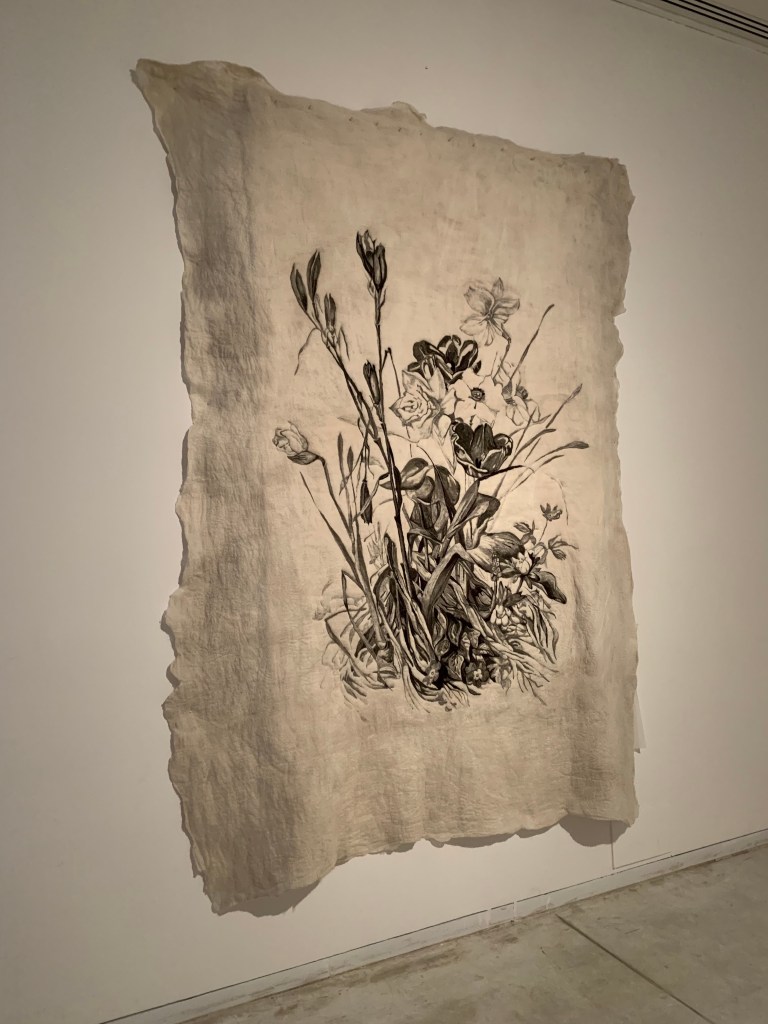
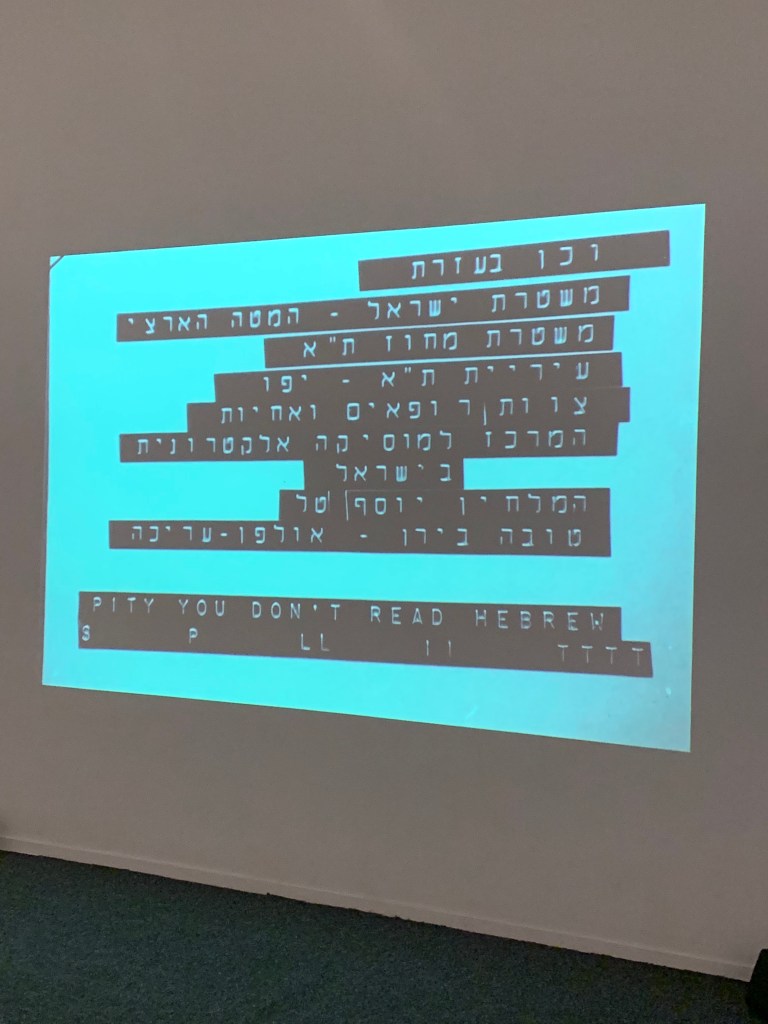
The next installation below was inspired by another historical event: Mother’s Day 1944, when bereaved German mothers and women received an illustrated card from the culture department of the Nazi Party central propaganda office. The card had quotations from Hitler, Joseph Goebbels, and other officials iterating the fact that the dead did not die in vain, and although there is no afterlife, the dead continue in the life that followed them. A drawing of a bouquet of dead and blooming flowers was attached in the inside of the letter — the image that is represented in this art piece below.
The name of the work is God Full of Wombs, a play on words on the name of a prayer for the soul of a person who has died, recited graveside during burial services. As the caption stated: “The conceit–depending on how they are vowelized, the Hebrew letters of the word rechem can mean either womb or mercy — lends God a motherly essence and fills him with wombs.”
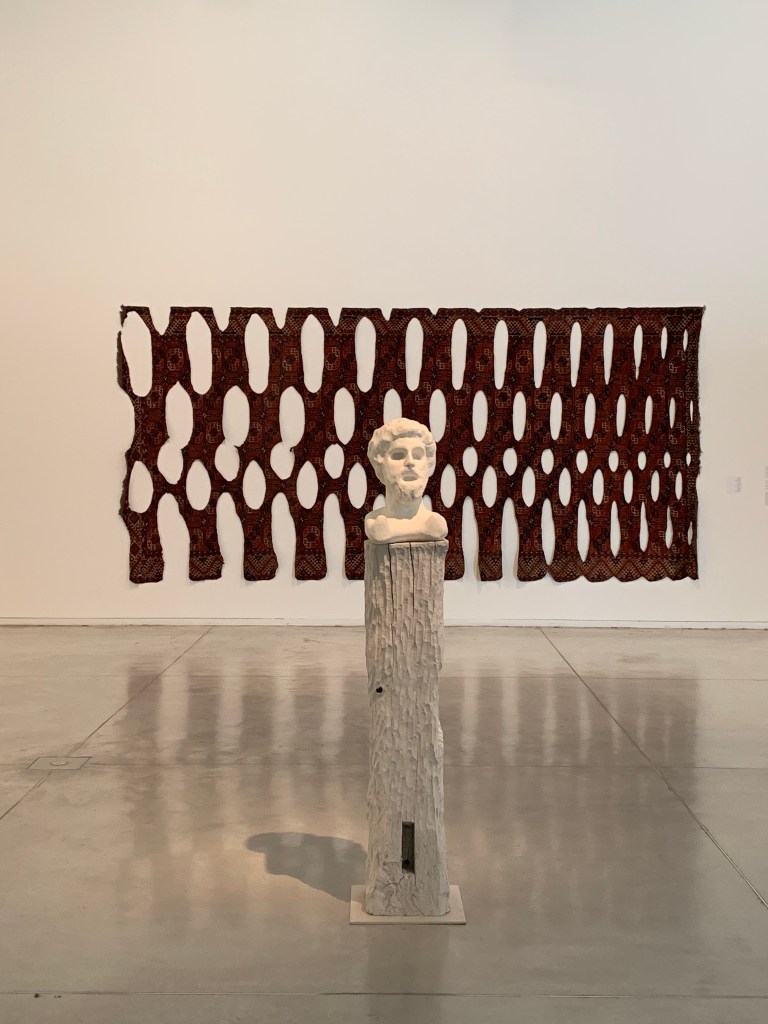
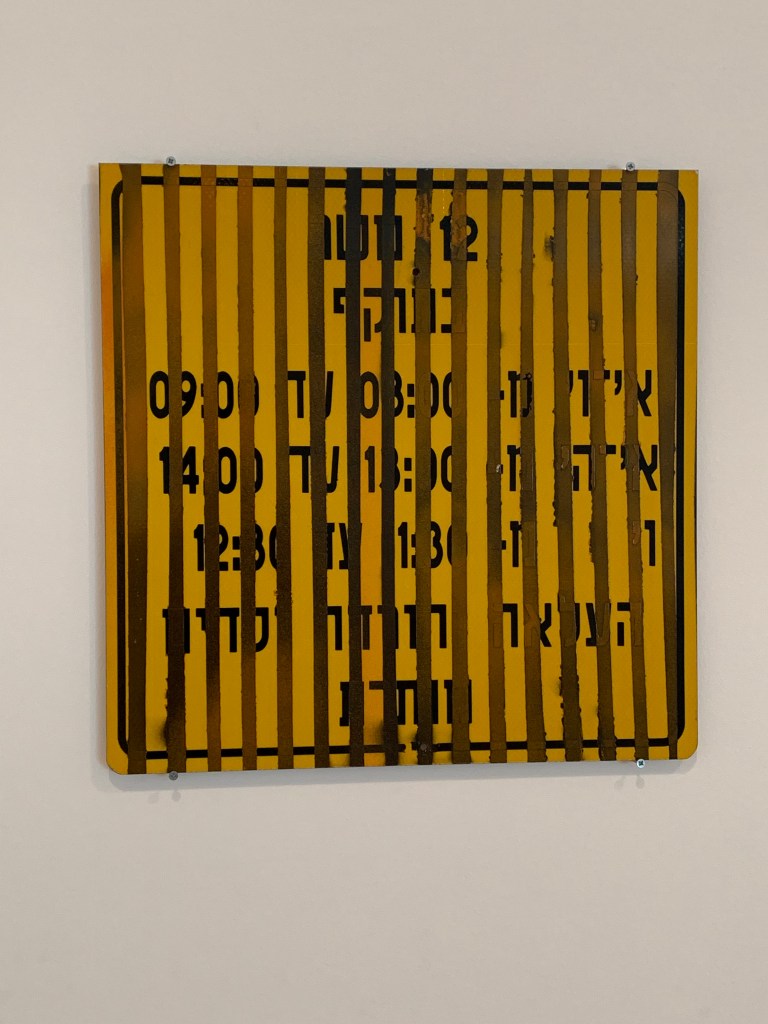
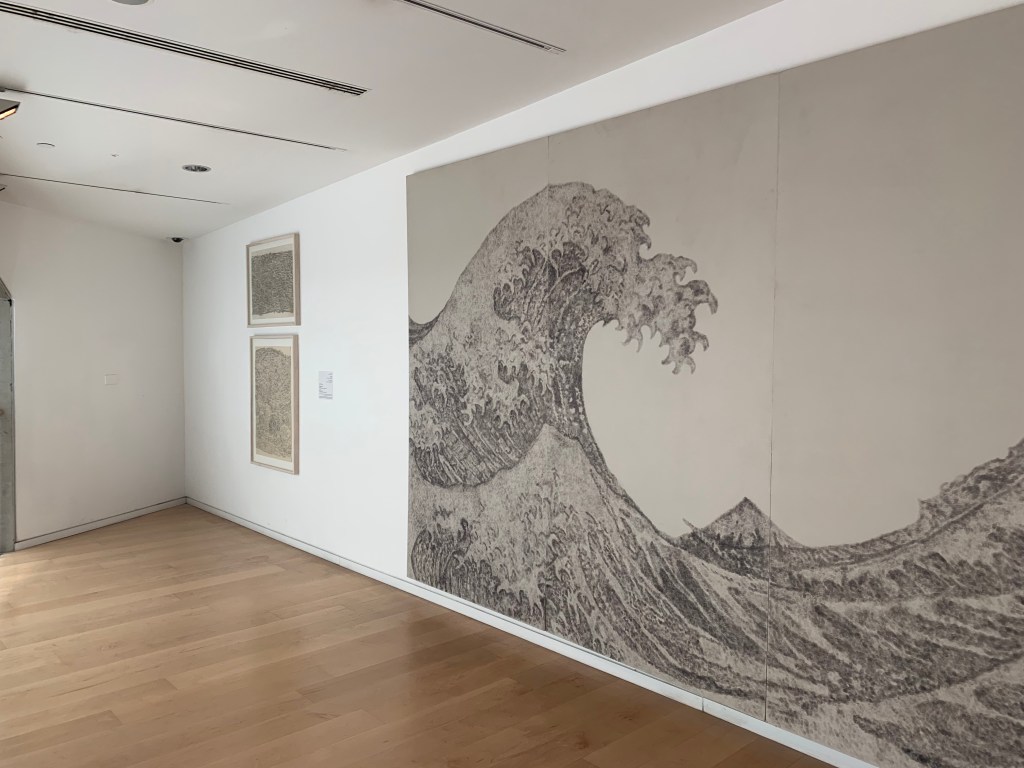
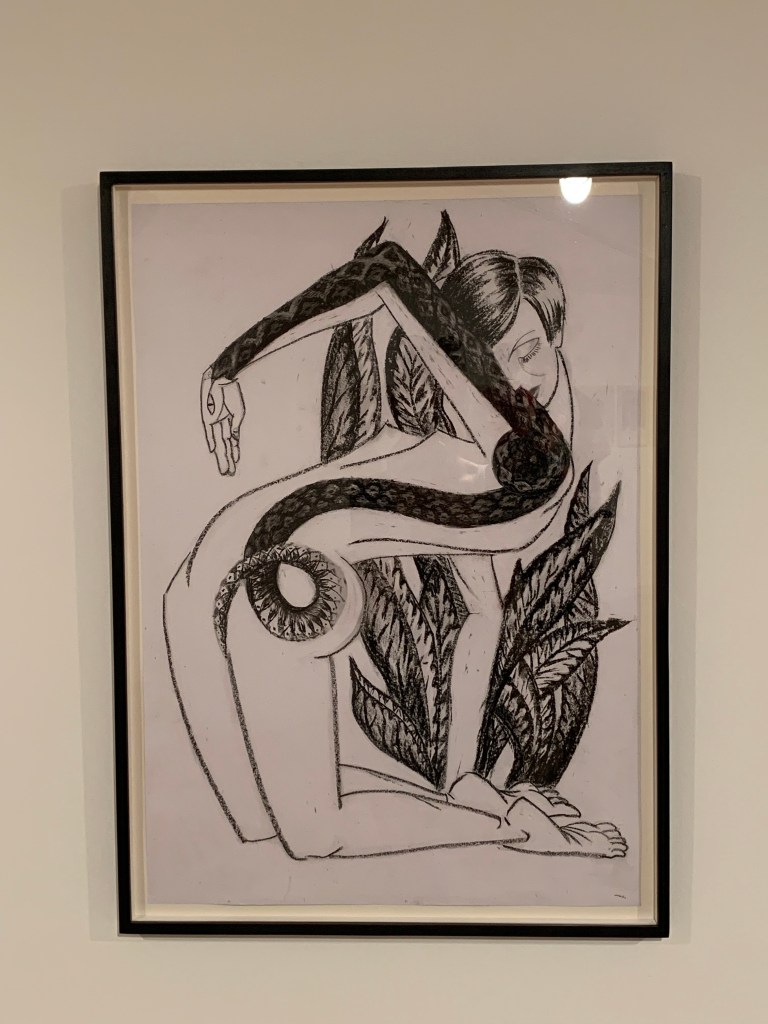
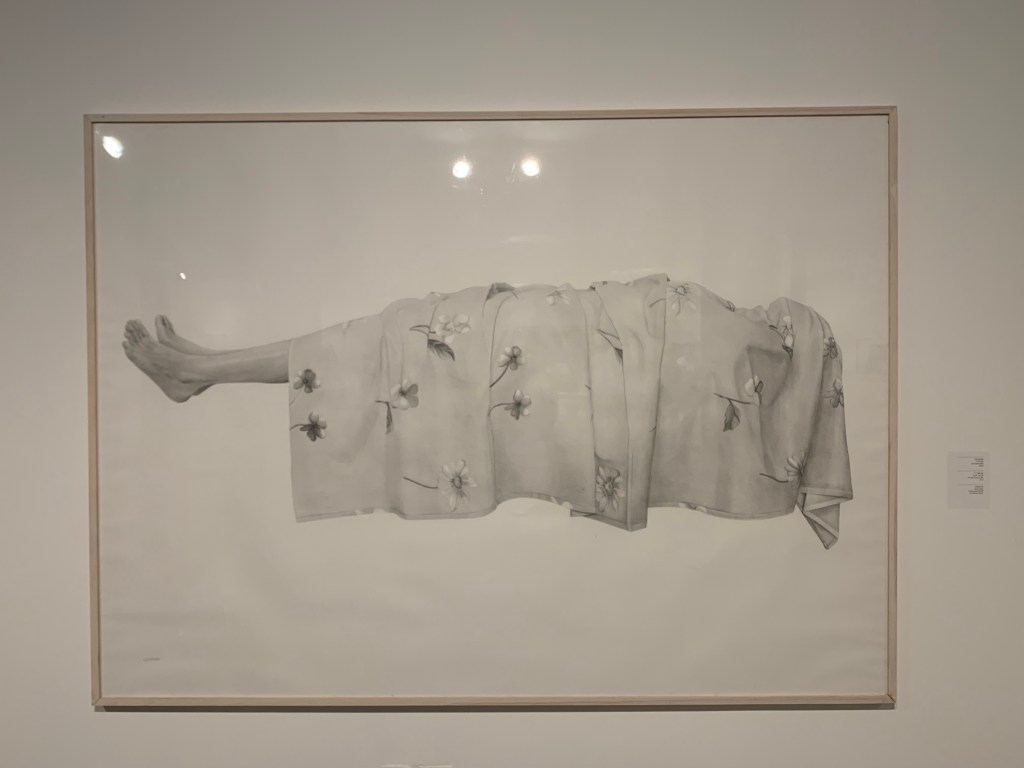
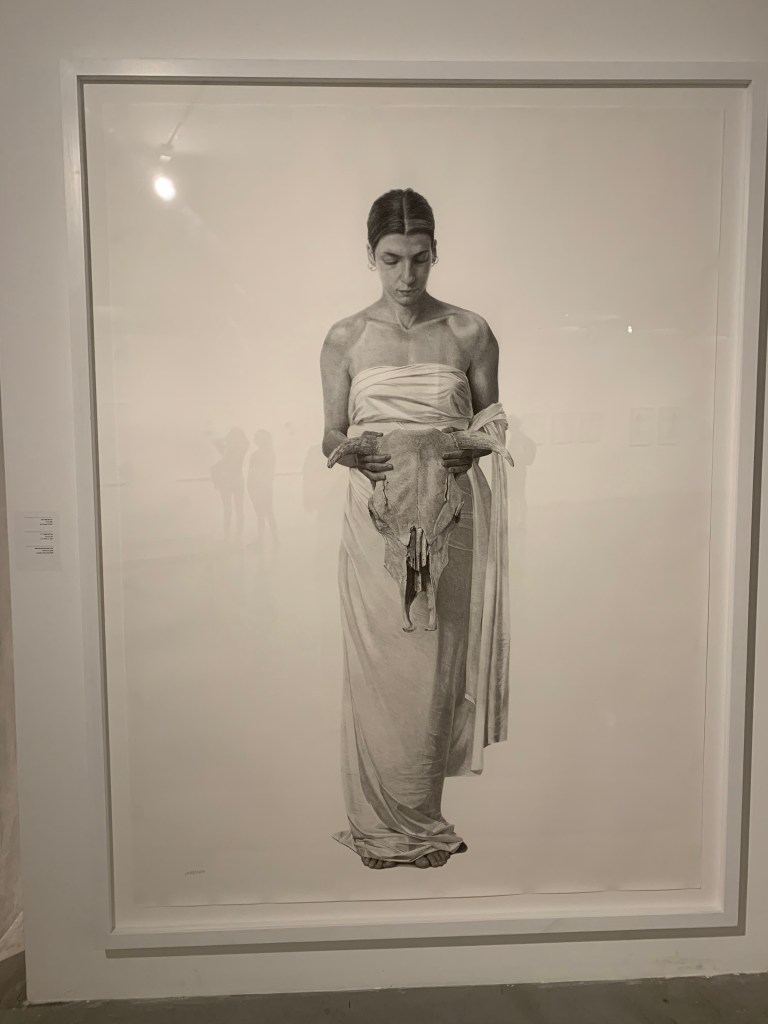
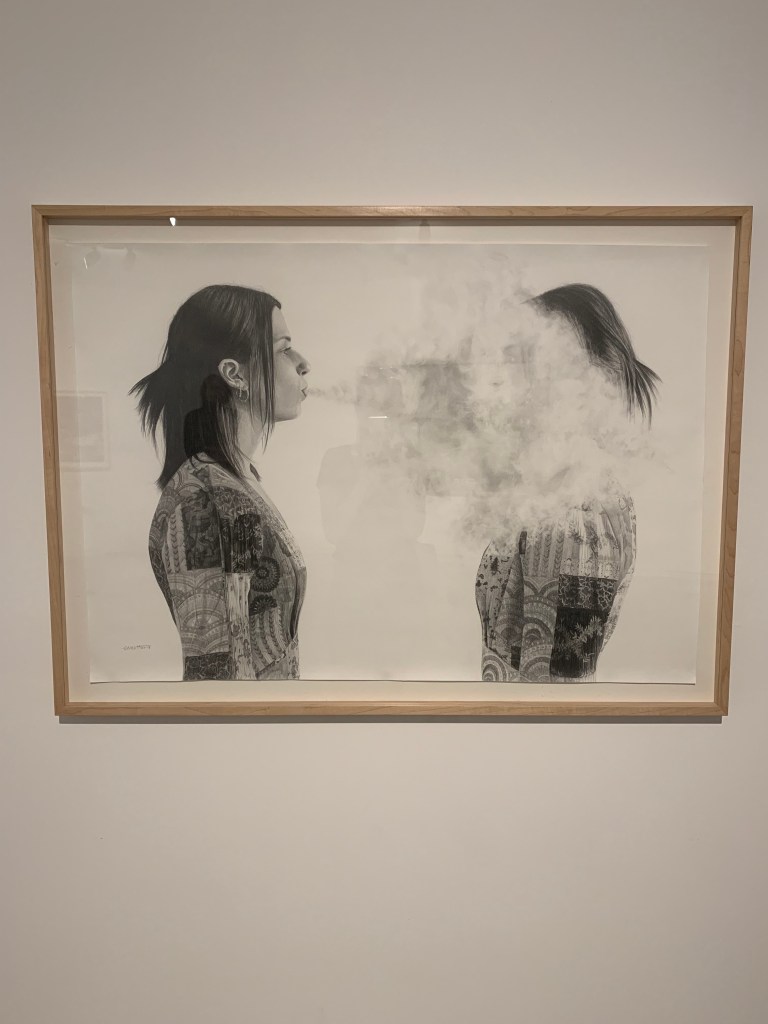
The following pieces are by Palestinian artist Samah Shihadi from an exhibit called “Spellbound.” I found them eerie and mesmerizing.
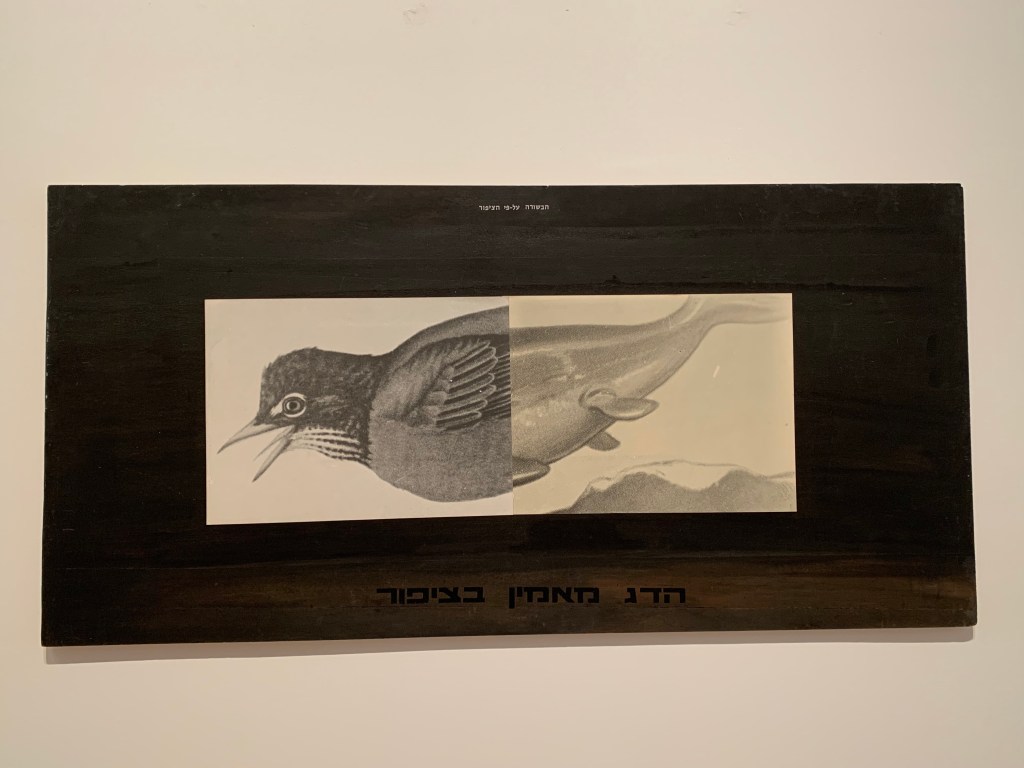
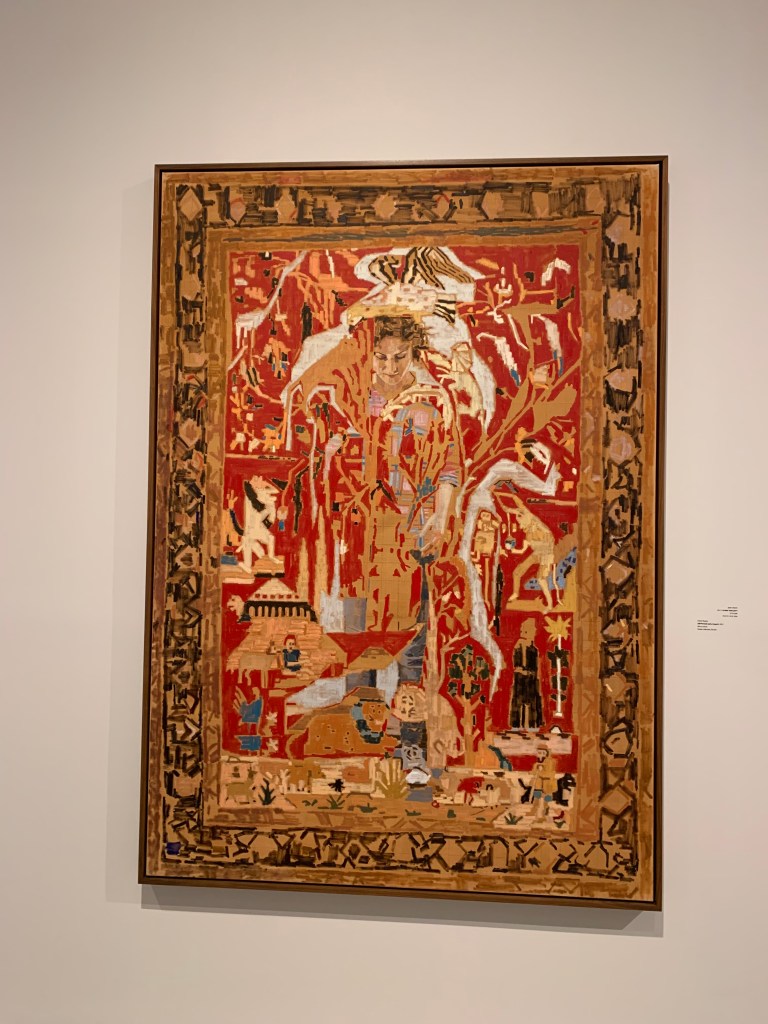
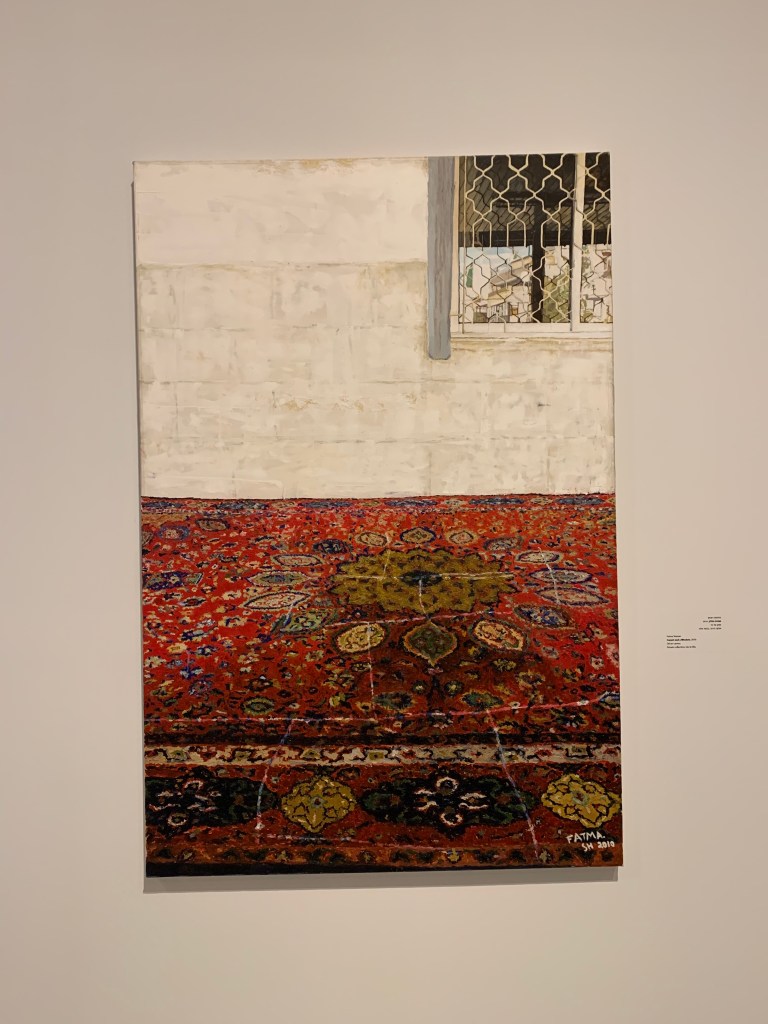
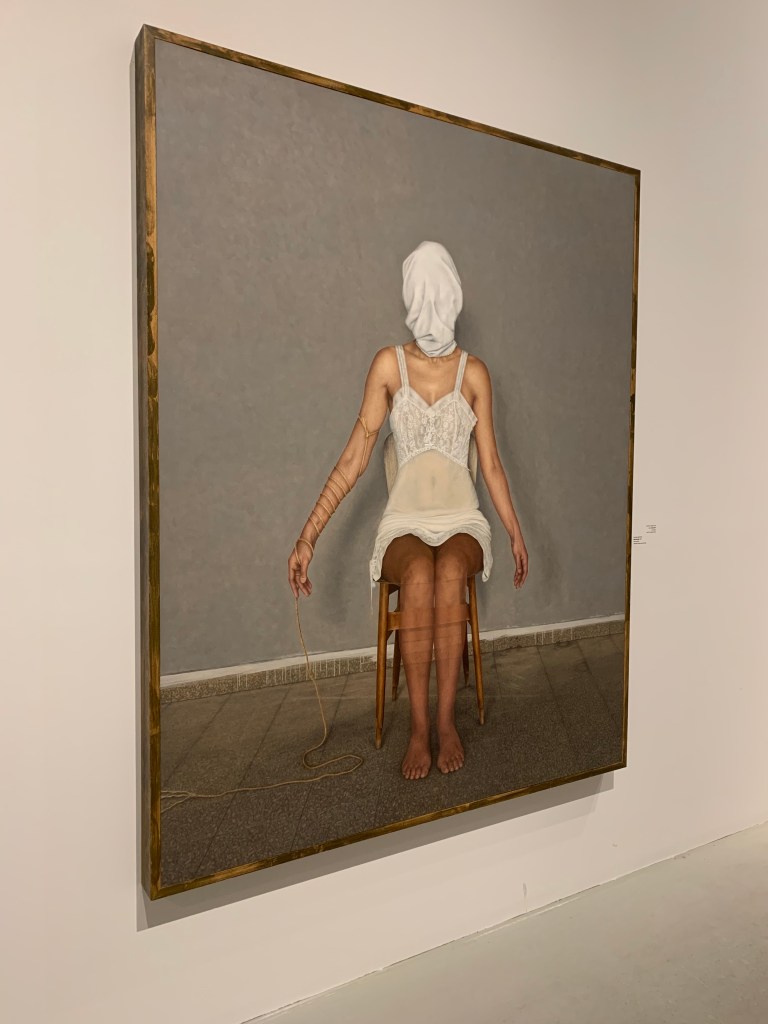
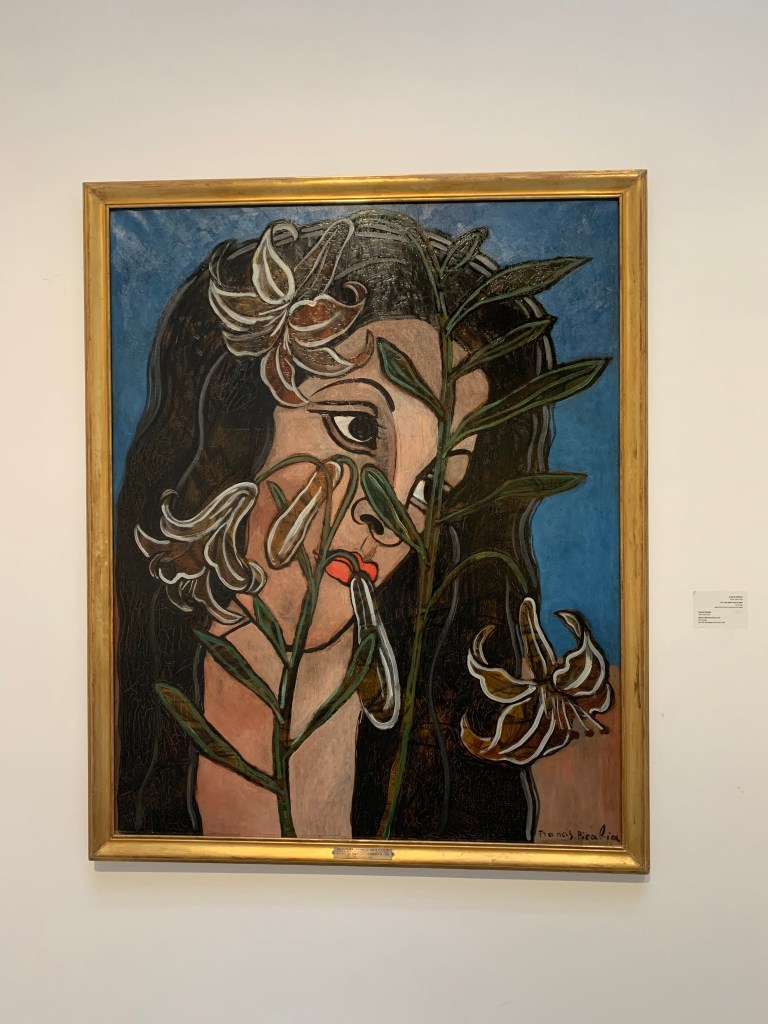
The following exhibit was one dedicated to Israeli artists — I’ve included some pictures of the paintings and drawings I found especially beautiful. The final section of the exhibit featured a wall full of self-portraits of the artists — it was a fun challenge to see if I could identify the artists by their style of painting.
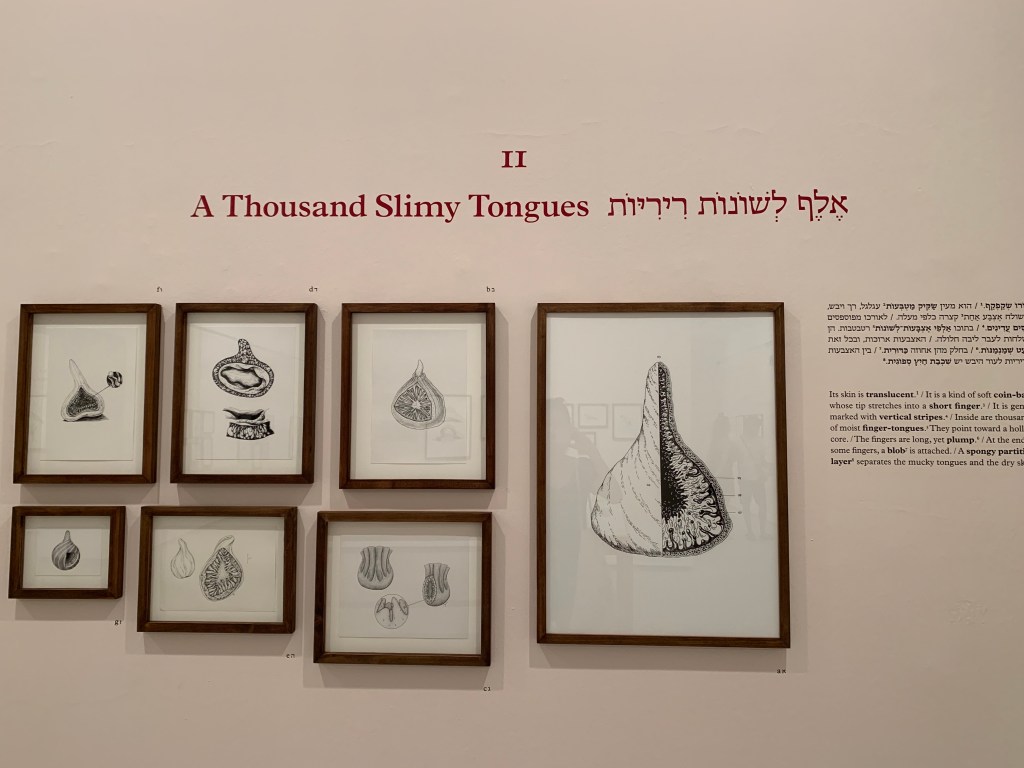
One last favorite exhibit: a collaboration between artist Shachar Kislev and a group of scientific illustrators. Kislev sent different illustrators a description of an unspecified object (which happened to all be fruits), which they were then asked to draw. The result : a bizarre collection of drawings somewhat resembling fruit. Part of the visitors challenge was to try and guess the fruit, either by reading the description or looking at the drawings.
One example below: “A Thousand Slimy Tongues”
The description (as translated) reads “Its skin is translucent/ It is a kind of soft coin-bag whose tip stretches into a short finger / It is generally marked with vertical stripes / Inside are thousands of moist finger-tongues / They point towards a hollow core / The fingers are long, yet plump / At the end of some fingers, a blob is attached / A spongy partition layer separates the mucky tongues and the dry skin. “
The fruit at question is a fig. I loved how the descriptions defamiliarize the fruit, however, most illustrators get quite close to rendering the fruit, without even knowing it.
And finally, a draft of a poem I’ve been working on, inspired by my visit to the museum. I took the title from one of the installations. I’ve been thinking a lot about maternal love and how it differs from romantic love (cue Carrie Bradshaw monologue…) Although I’ve never experienced maternal love myself, it seems like an entirely different beast. Both are categorized as types of “love,” but is it easy to decipher between them? How do we know when this insatiable need for love begins to transform into something more primal? When a romantic partner can no longer meet this need, because there is something more powerful lying dormant inside us? I guess a lot of these thoughts stem from my own fascination with how some women know they want children, a certainty that feels quite foreign to me. Does it come out of some sense of obligation? Or a sense of unfulfilled desire….a desire to obtain something romantic love can never quite give. At what point are we asking too much from romantic love?
God Full of Wombs
Rechem. Womb or mercy,
depending on how the lips move,
the wet shaping of a vowel. In the museum,
a mother settles her hand on her son's head
and tells him something inscrutable about the painting.
Is she explaining the breast let loose from silk?
The oiled licks of the paintbrush? Or articulating
the difference between painting and picture, making one
less real. It's more about her hand on his head--
warmth burst from that bouquet of flowers inside,
dead and blooming. Cut for another.
When does 'What can I take?' become 'What can I give?'
She heaves him up on her hip, so he can see it eye level.
I feel my own flowers lift their terribly fragile heads.
If you were here with me in front of this painting,
with all this inside me, who knows what I'd say.
 Chiasmos