When my dad found out I was traveling to Greece, he immediately contacted an old Greek friend of his, Yanni. He was quick to reply, offering me to come stay for a bit with him and his family at their summer home on the island of Paros. And so I set off from Folegandros to spend four days at a beautiful villa dating back to the end of the Byzantine Empire.
It was nice to finally be greeted by someone at a destination — Yanni and his family met me at the port with open arms. We all took the bus back from the port towards the town of Parikia, getting off at an unmarked stop on the side of the road. After following a small path from the road into the woods, we reached a clearing filled with peach trees, lemon trees, fig bushes, caper vines, and olive trees. When we reached the house, I was surprised to see not just one building, but a collection of houses on the property. Yanni, a history professor like my dad, launched into the history of the villa and the surrounding area. Here’s a brief timeline (or rather, the small parts I remember) : the villa was first built during the Byzantine Empire, then at some point taken over by pirates because of the natural spring source, and finally claimed by noblemen during the Ottoman Empire. His partner Kate’s grandfather bought the abandoned property in the 70s and refurbished it (a time during which ancient architecture was beginning to have value again, and much of Greece was being reconstructed/rebuilt).
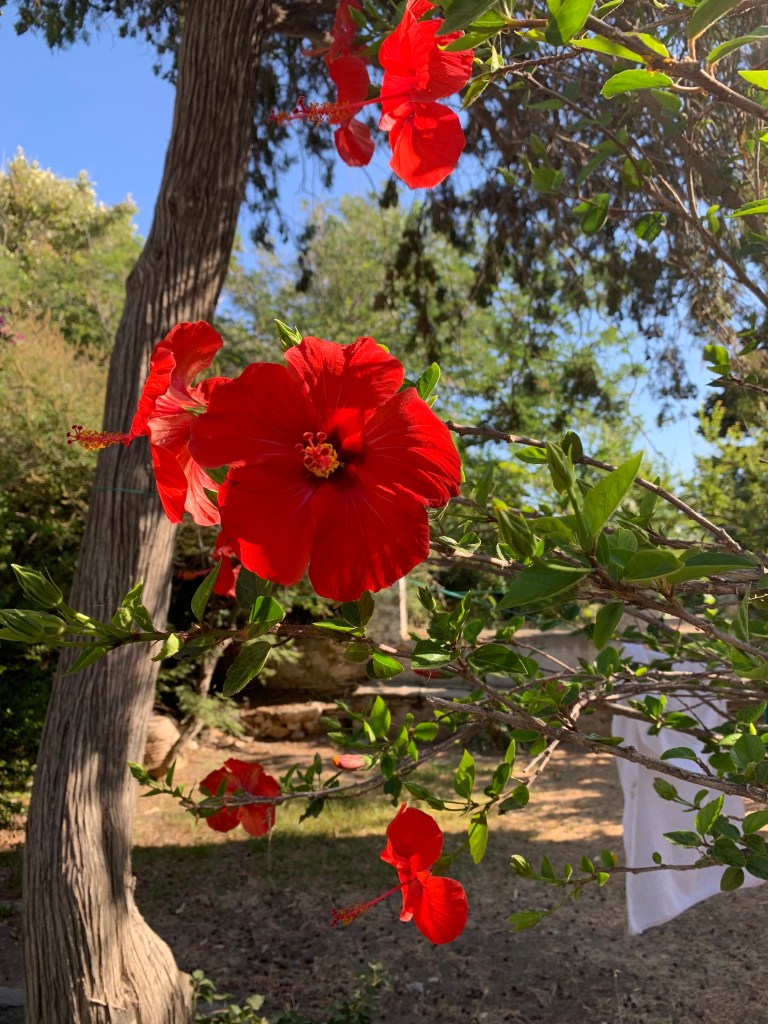
The property includes the main house, the servants’ quarters (which they now Airbnb out), a chapel (where their children were baptized), two large cisterns, and beautiful stone back patio lined with flowering plants.
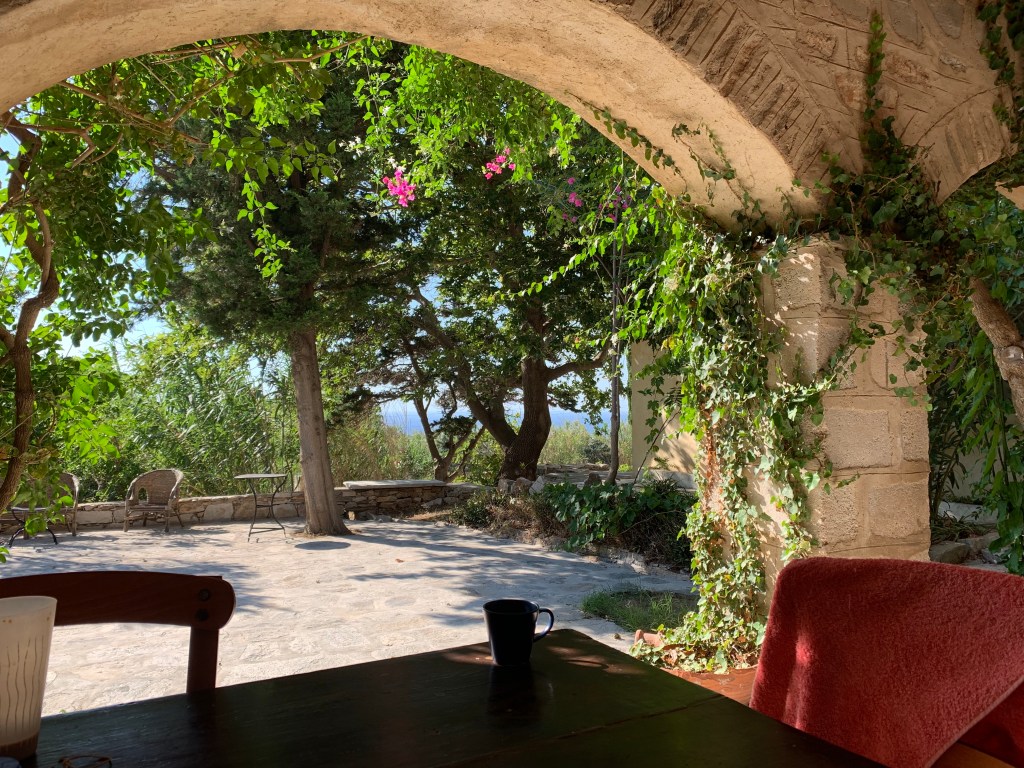
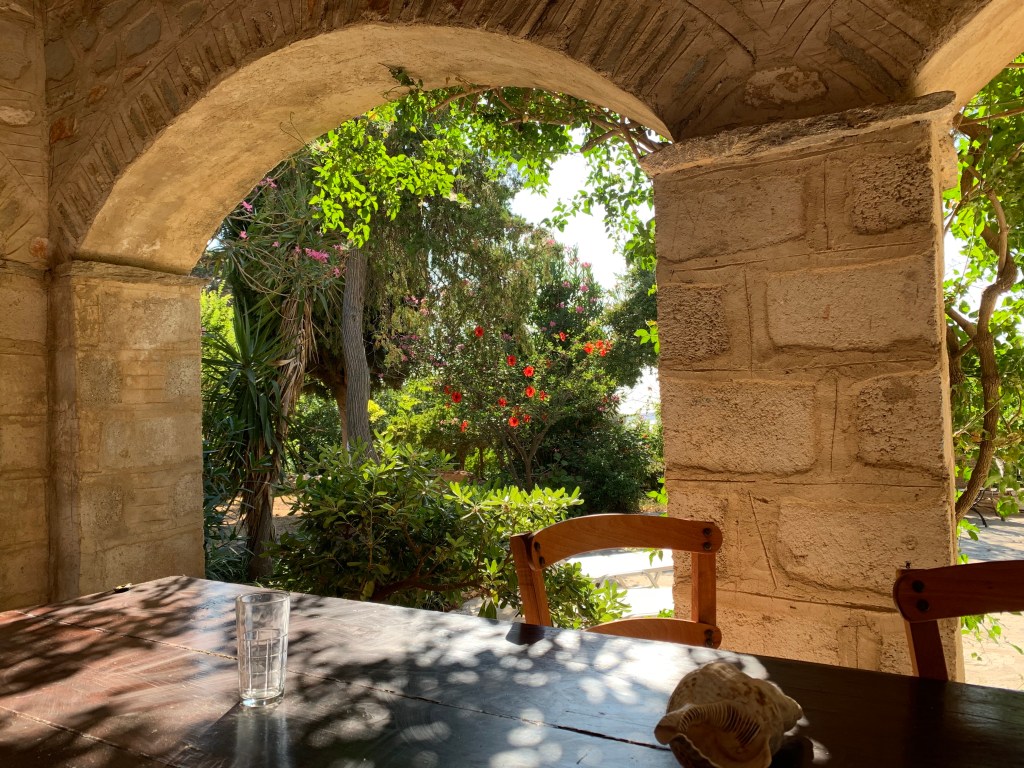
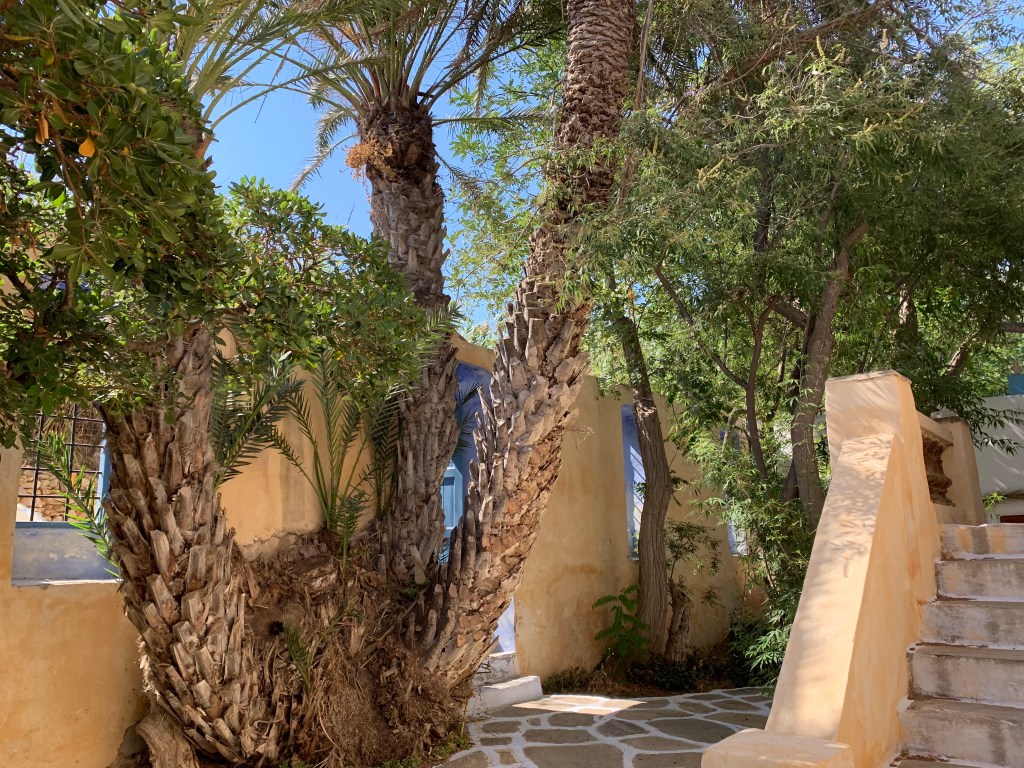
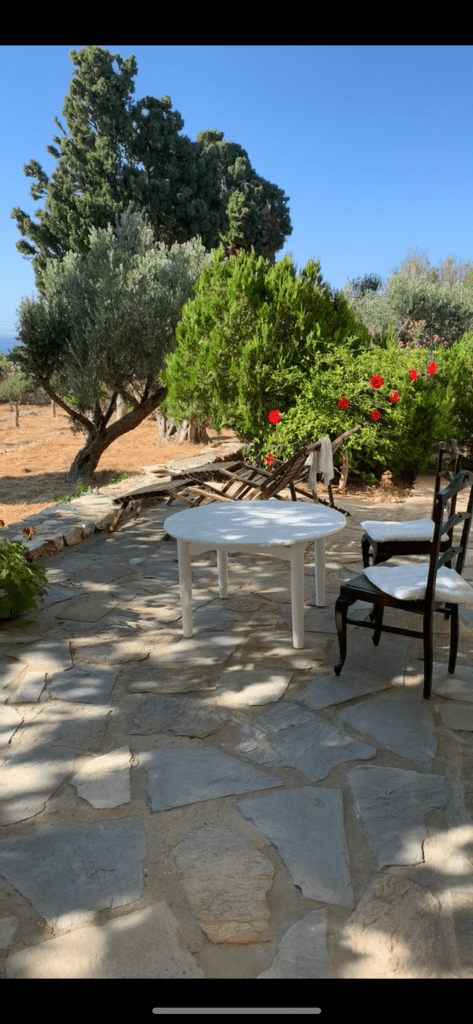
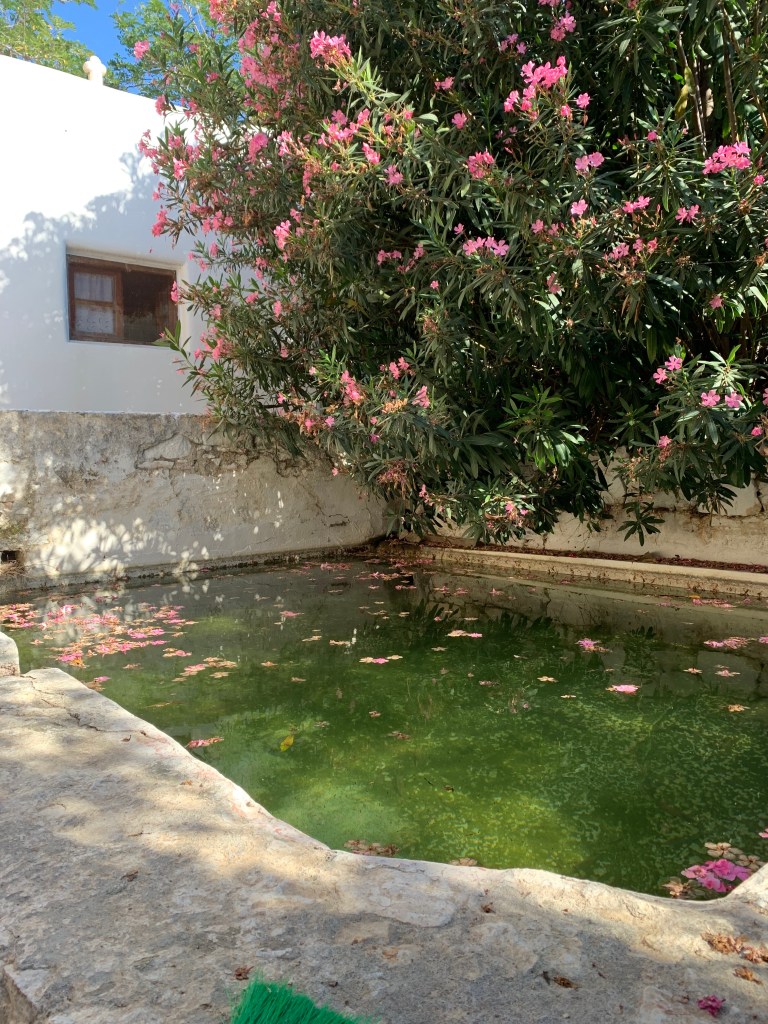
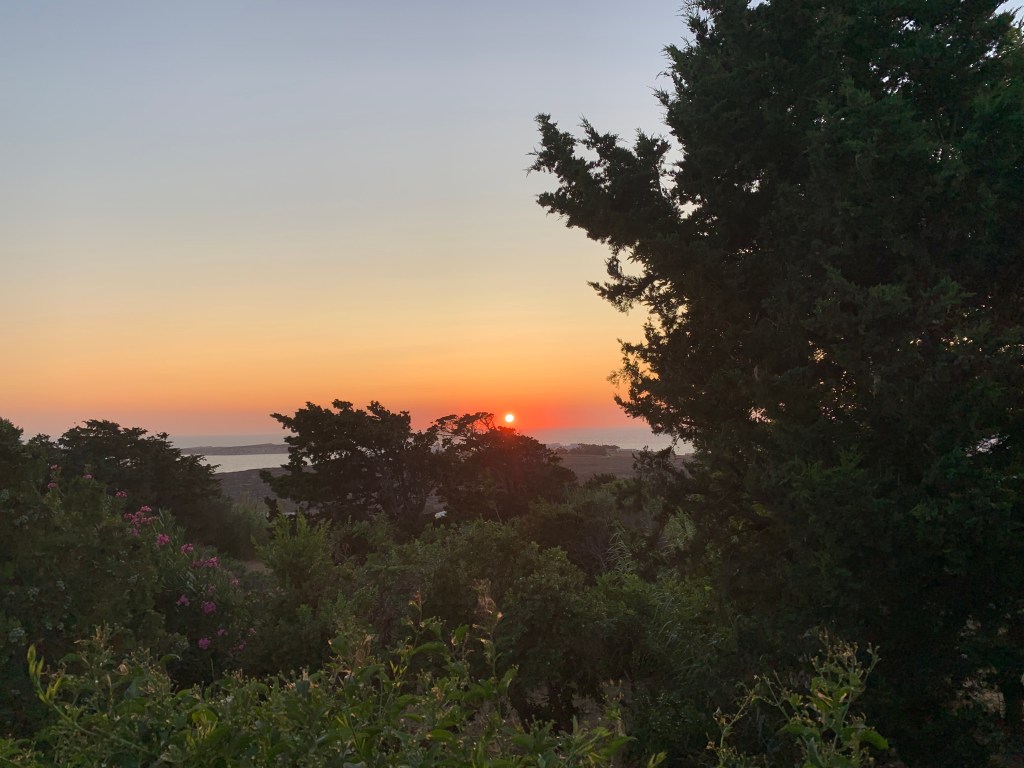
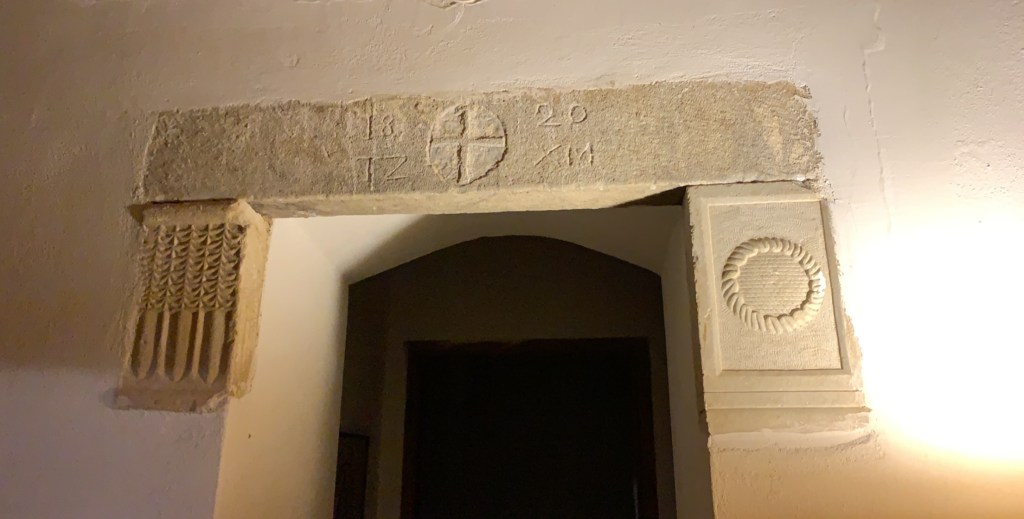
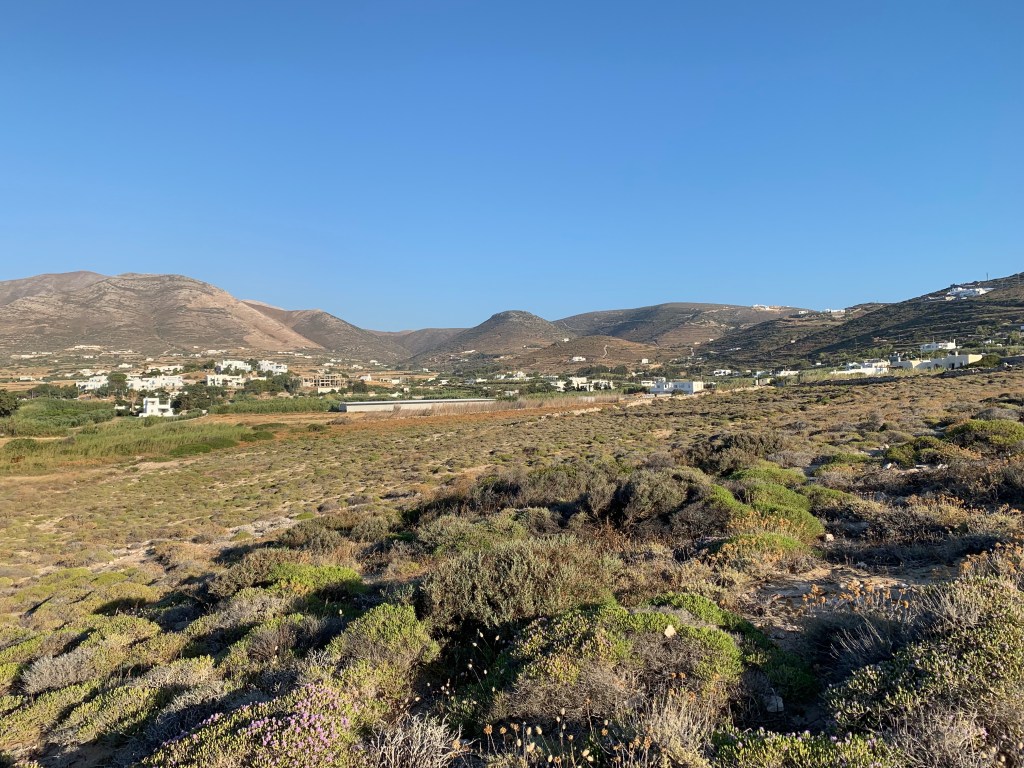
In the background of everything: a steady roar of cicadas. It’s hard to capture the complete peace of the place in pictures — I spent much time lying on the patio reading, taking naps, eating Greek yogurt with honey, and walking to the beach. The doors and windows are always open — the outside barely distinguishable from the inside — and we had all of our meals sitting around the outdoor table. Yanni taught me all the Greek essentials: how to make Greek coffee the right way, which meals require the addition of feta cheese (the answer: most of them), how to make a submarine (a sugary simple dessert from his childhood), and how to cook Greek gigantes beans.
The theme of a Greek summer, and of many European summer vacations, is to embrace doing absolutely nothing. Lounging about, eating good food, and enjoying the beautiful weather are the only requirements. For me, as an American, it’s something I’m still learning to do….to let go of this deep sense of obligation to “accomplish” something, or to measure the worth of my days in terms of productivity. As silly as it seems, this trip has been helping me to truly value downtown, and to embrace leisure in every sense of the word.
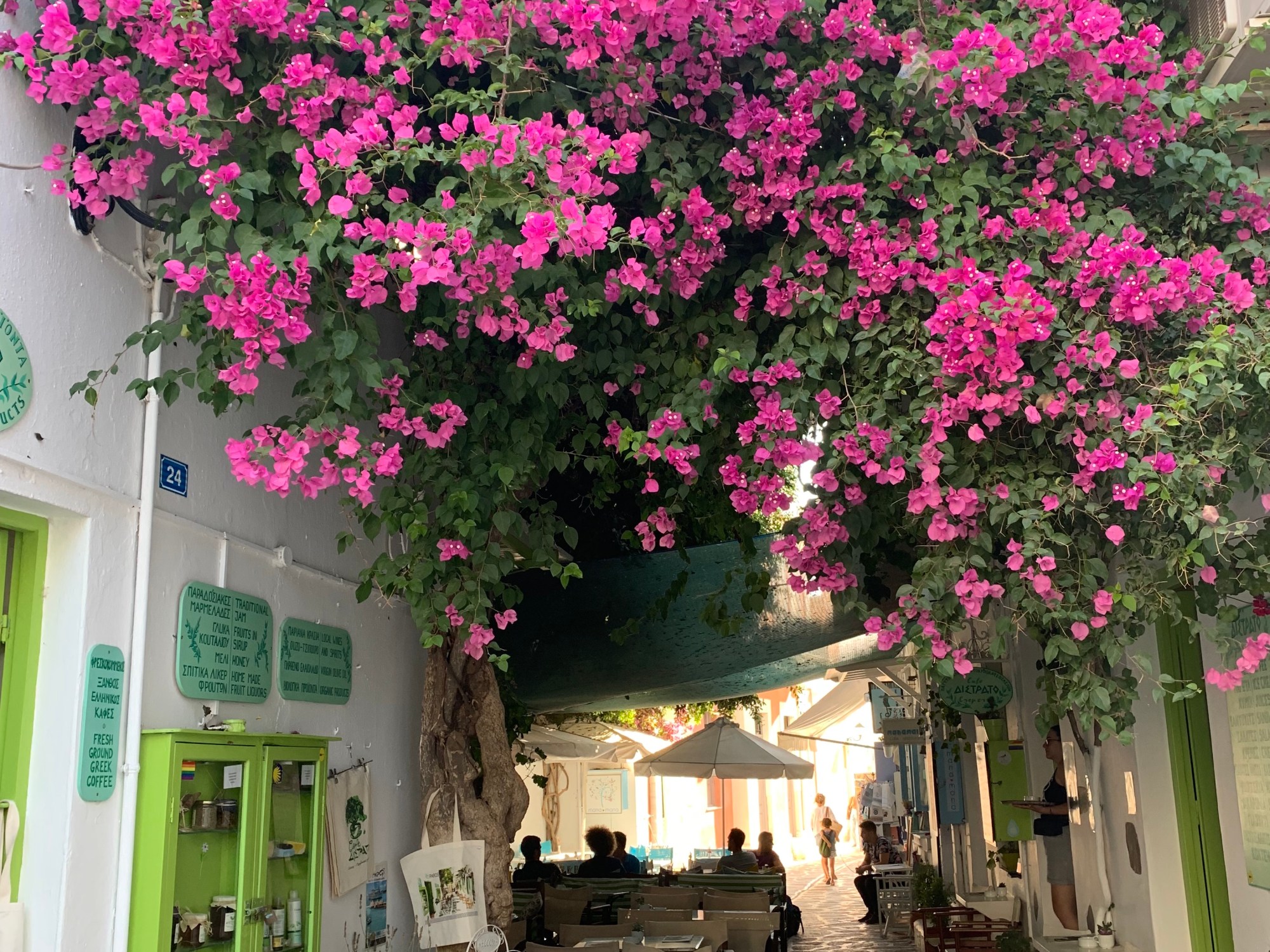
When I was not relaxing on the set of Call Me By Your Name, I spent time exploring the local towns. I first went to the old coast town on the north point of the island, Naoussa. The port town was perfectly picturesque as all Greek towns seem to be, with small winding stone streets between white homes and shops and pink wisteria hanging over every windowsill.
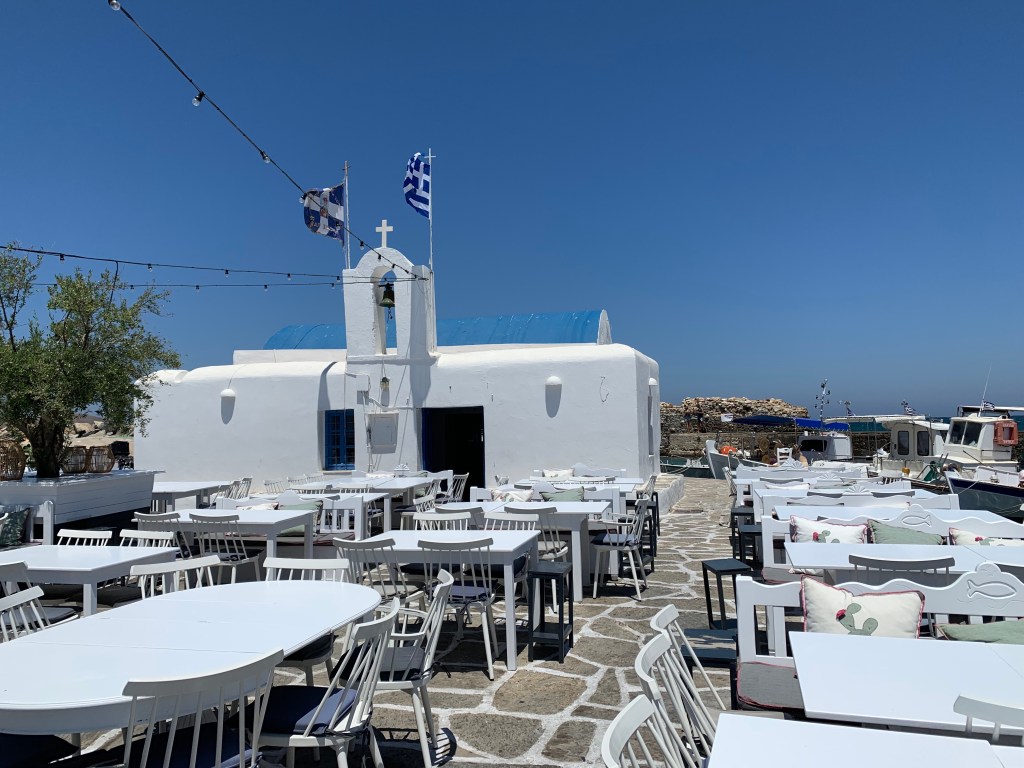
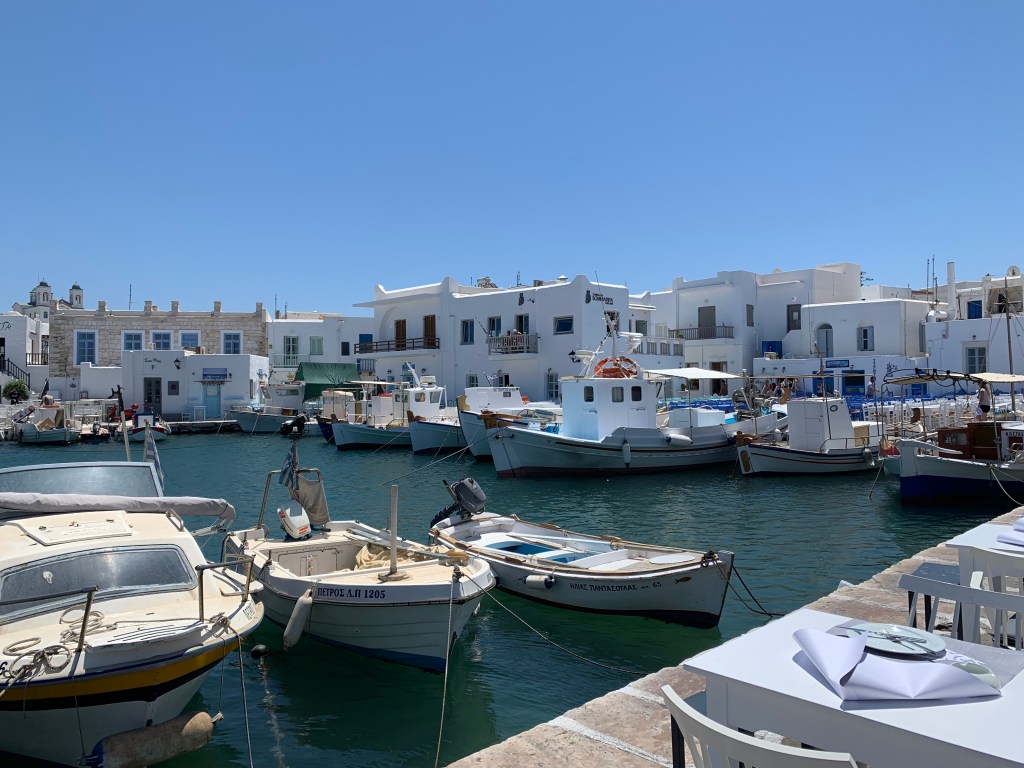
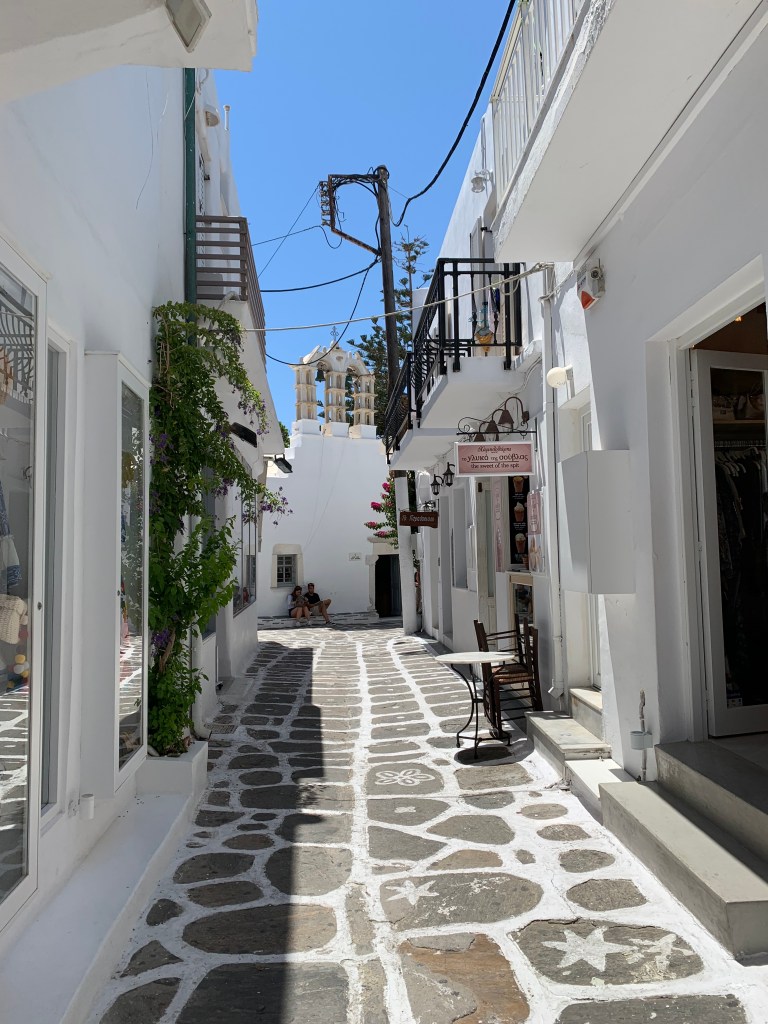
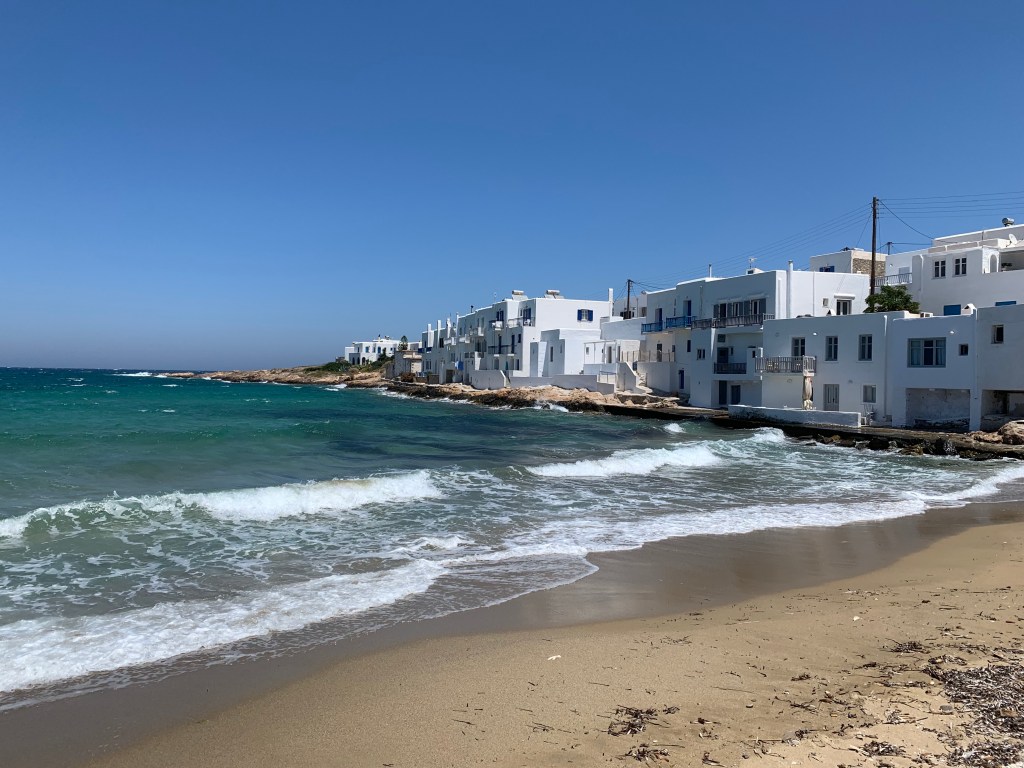
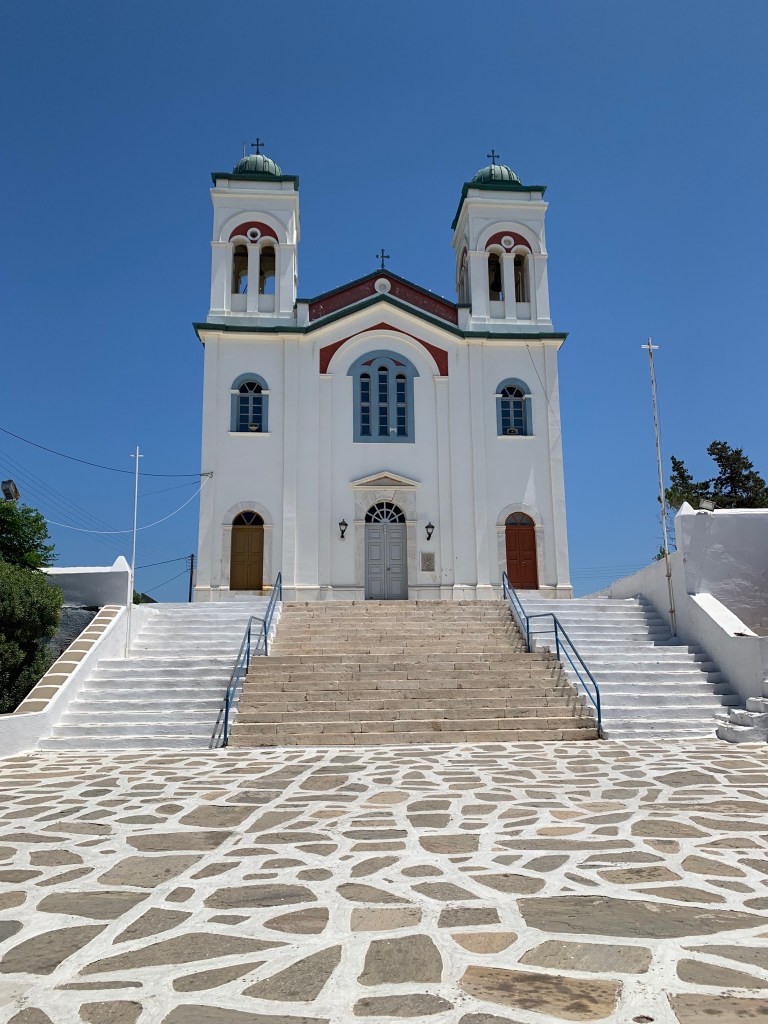
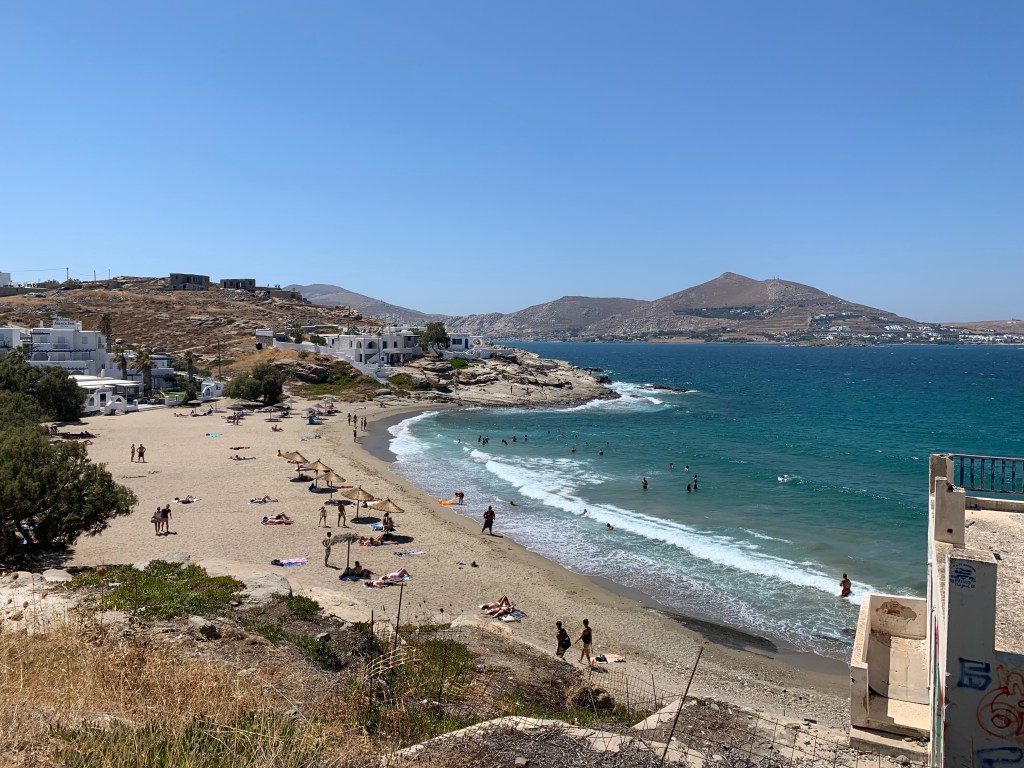
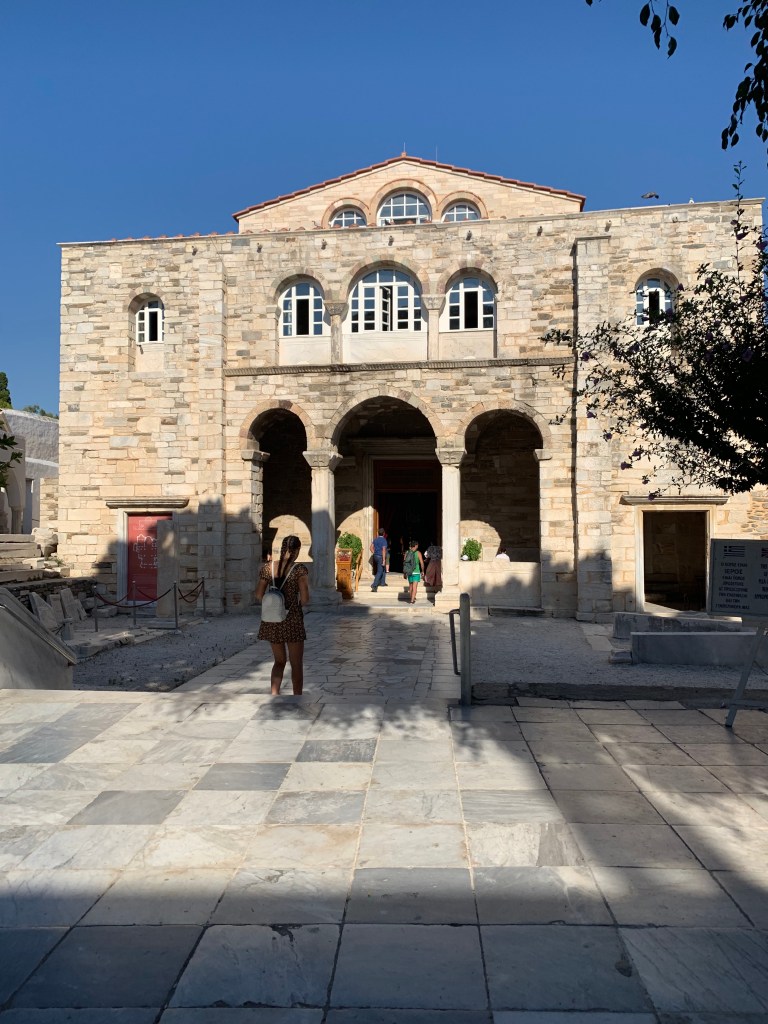
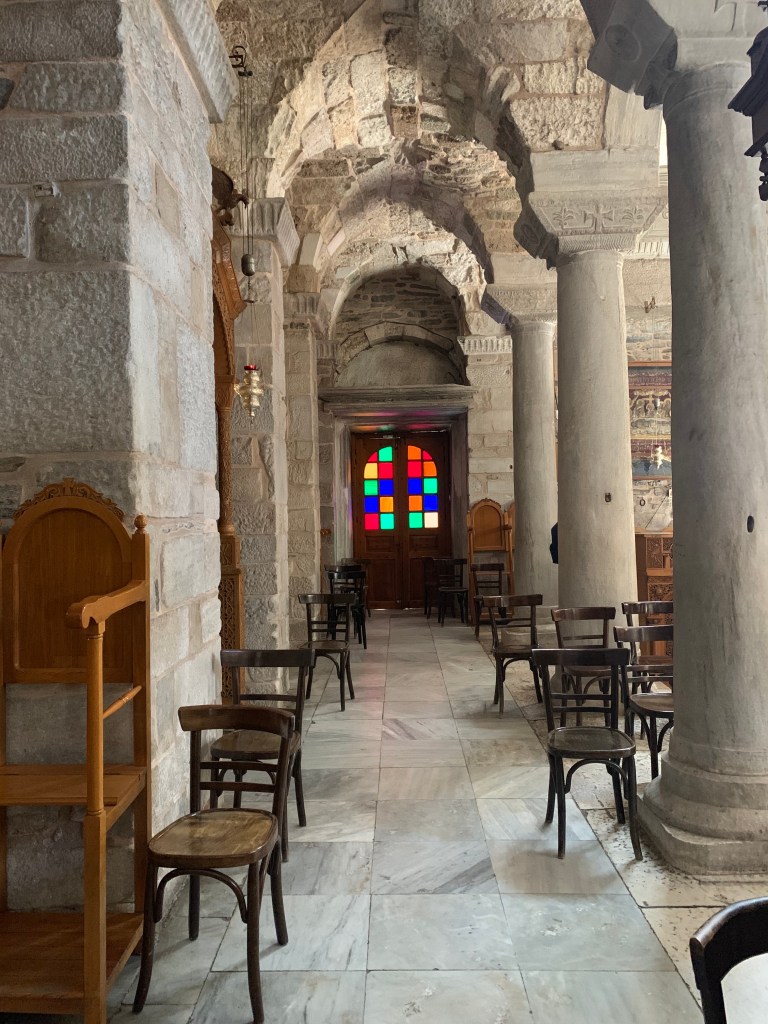
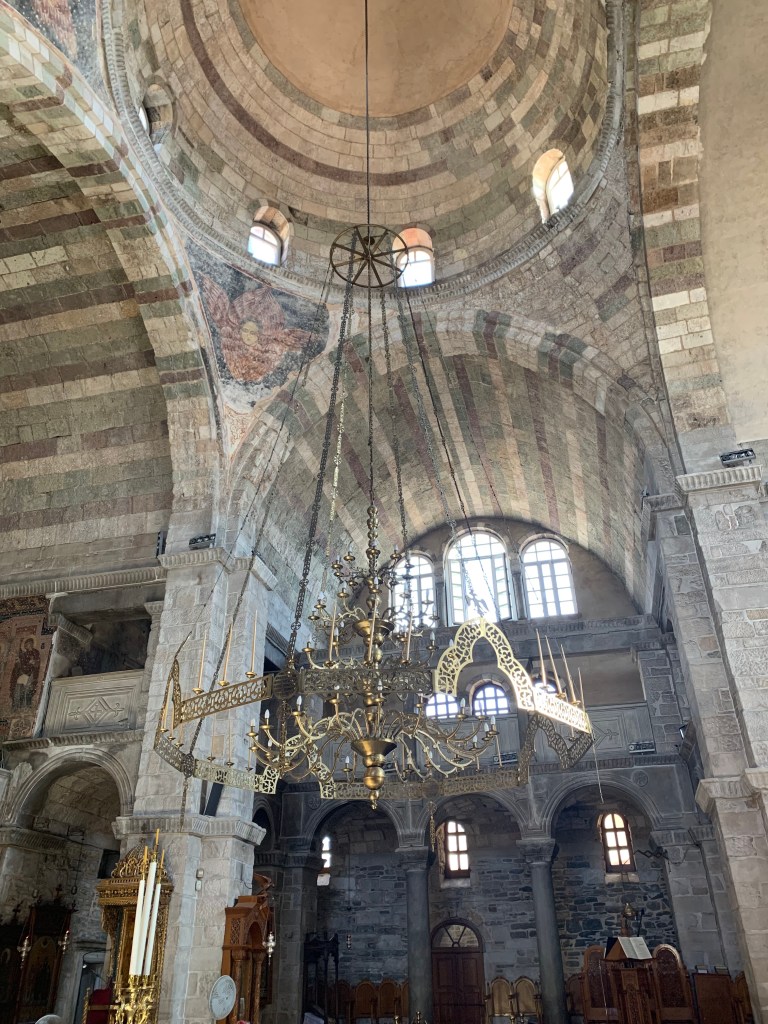
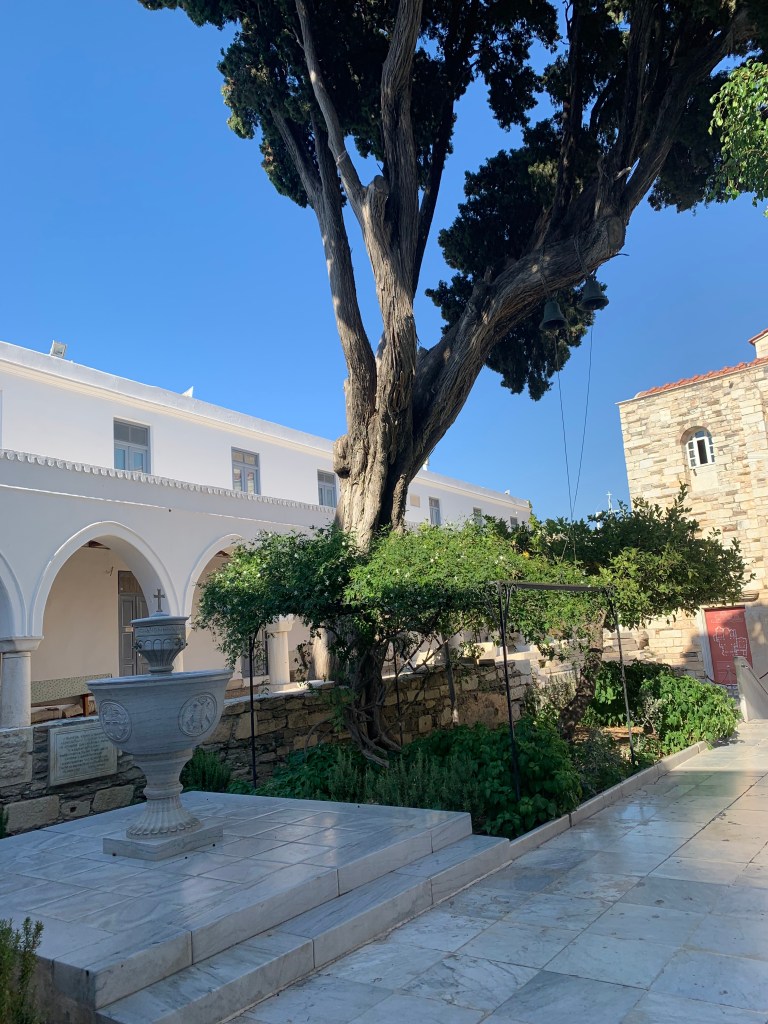
I also spent some time wandering around the port town (and capital) of the island, Parikia. It was quite similar to Naoussa, but perhaps more lively, with more restaurants and boutiques to explore. The town also features one of Greece’s most important Byzantine monuments, Panagia Ekantontapiliani (Our Lady of the Hundred Gates), and dates back it 326.
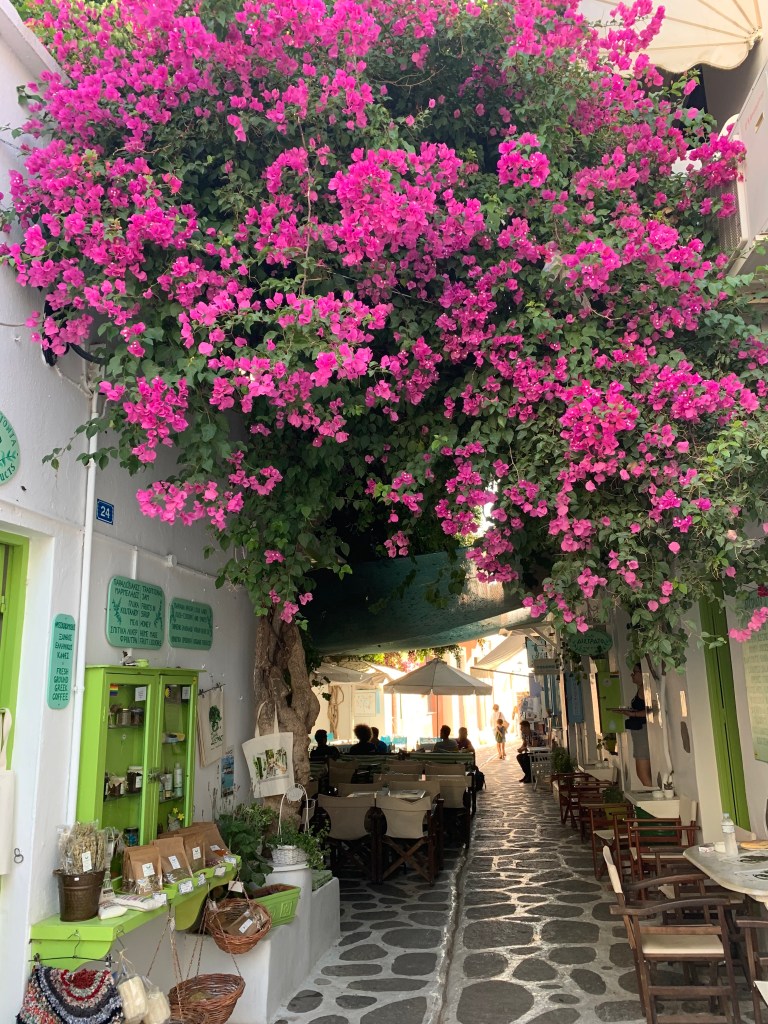
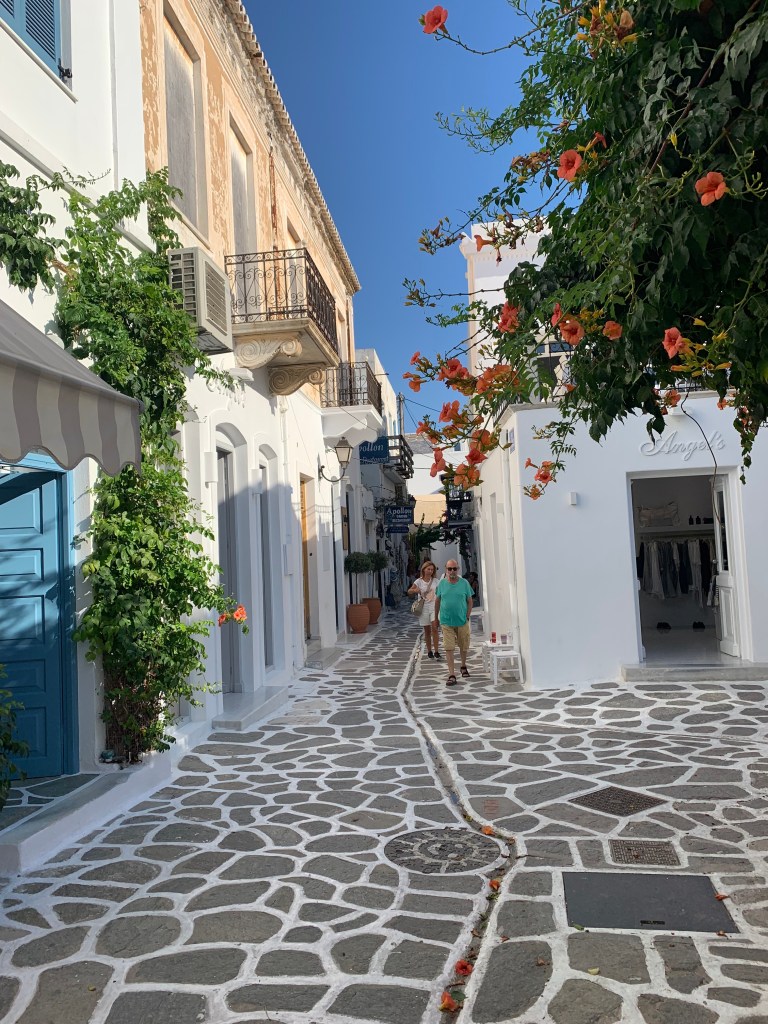
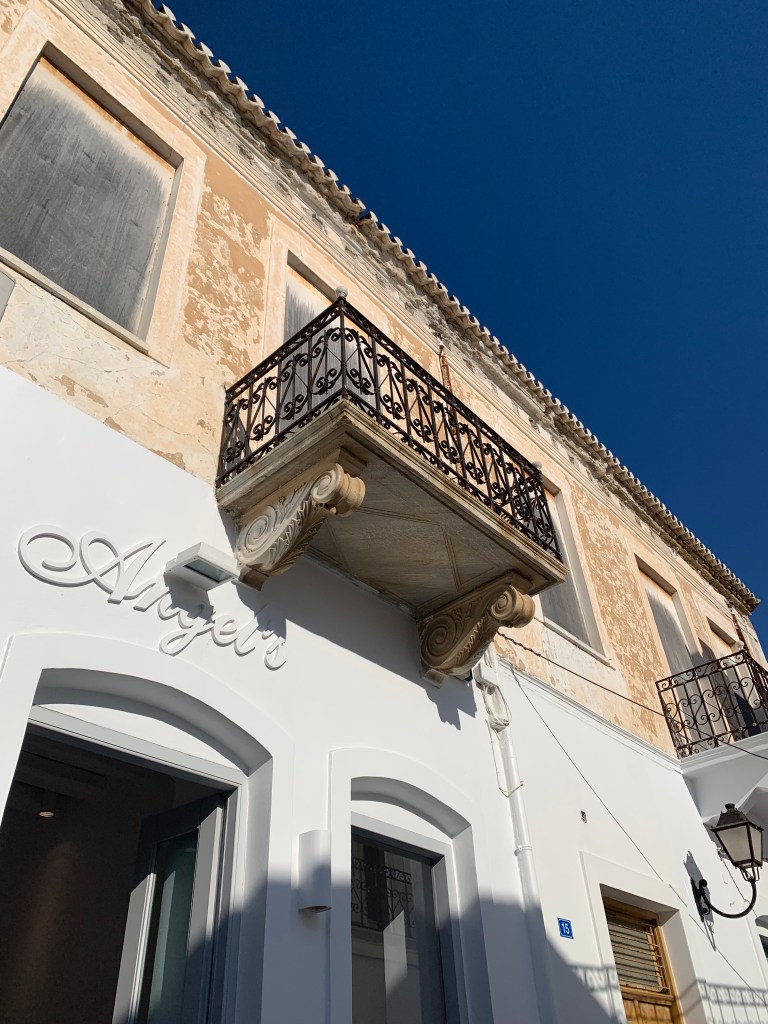
These streets, so quiet and empty during the hot day hours, fill with people the instant the sun goes down. So I recruited Max, the oldest kid in the family, to take a bus into town and check out the nightlife — a night that didn’t end until 8am due to inconvenient bus schedules.
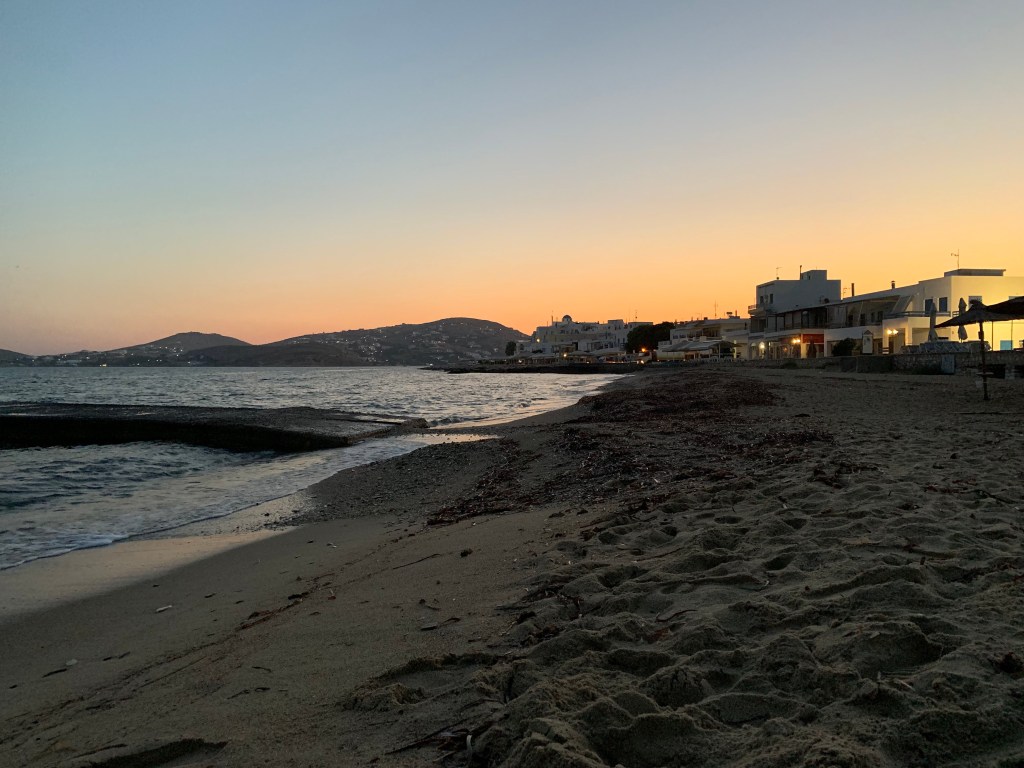
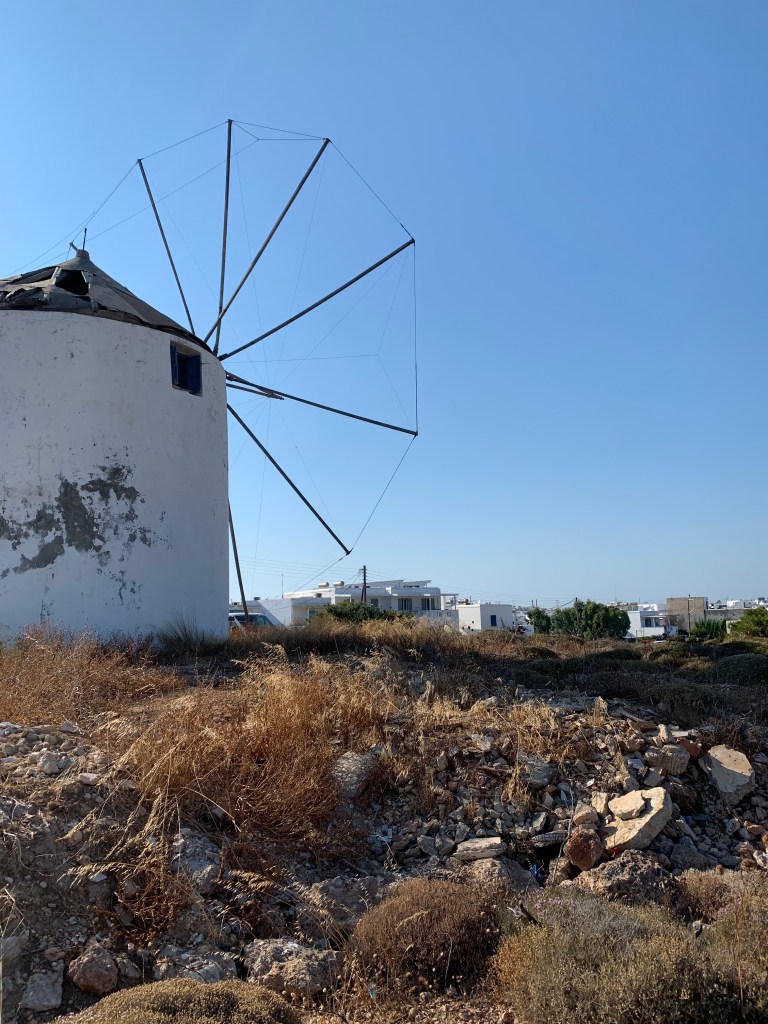
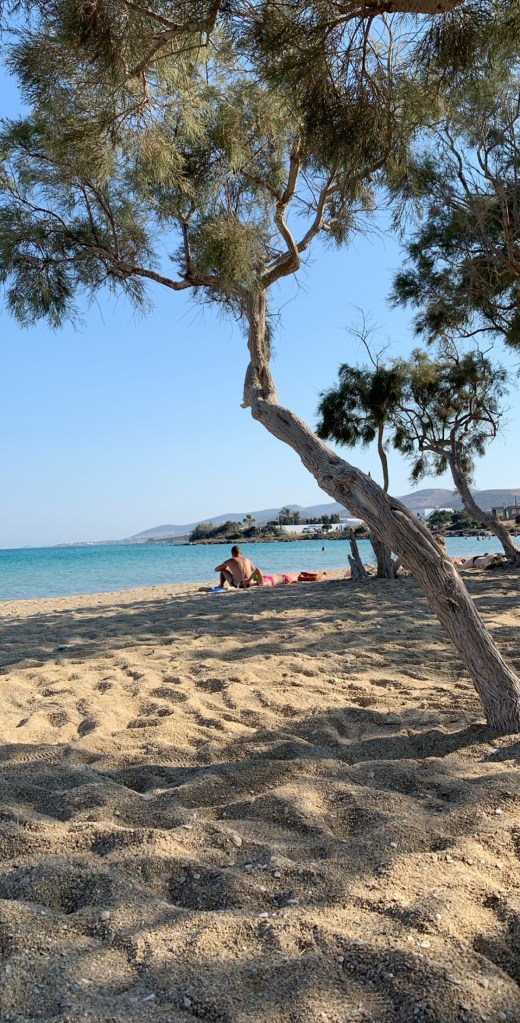
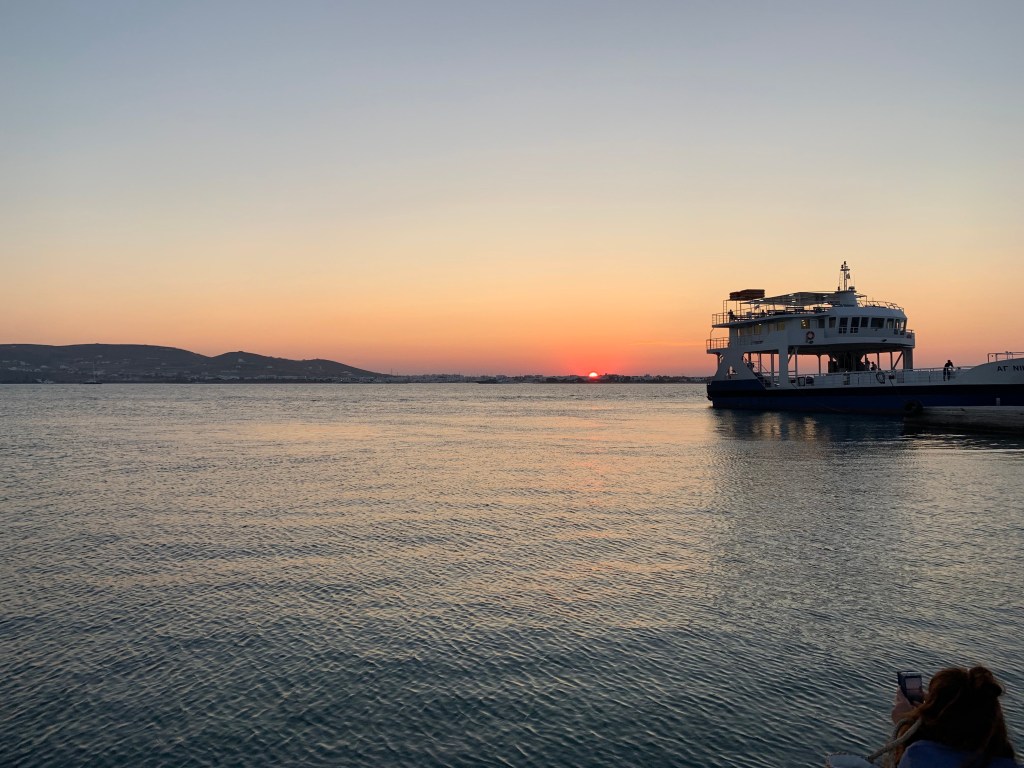
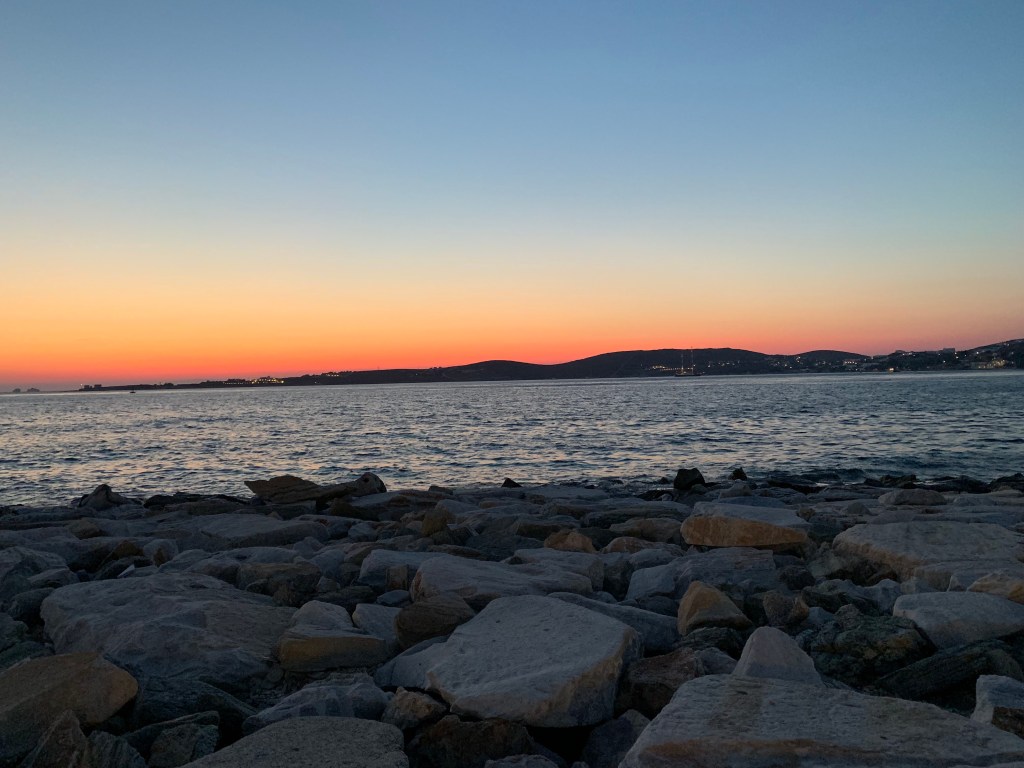
The next day, after catching up on some needed sleep, Max and I took a ferry to go explore the small island just off the coast of Paros, Antiparos. The town itself was pretty similar to the main island, so we grabbed some falafels and Greek salad and found a local beach, Paralia Psaraliki. This beach was my favorite yet: soft sand in the water and on the beach (important, since most Mediterranean beaches have painful stones) with short pine trees to hide from the sun. After a day of relaxing on the beach and watching the sunset, we went to grab dinner along the waterfront in town.
Since I’m terribly at figuring out how to neatly conclude these blog posts, I’ll end instead on a random thought I had while on the island. Just across from the family’s house was a pasture with a group of donkeys. At unexpected times during the night, they would make the most terrifying noises. It took me a while to figure out that they were the ones making those noises, since they sound so unearthly. The closest thing I can think to describe it would be the sound of an ungreased hinge, or an old-timey car horn. A sound so mechanical doesn’t sound like it should come out of such a boring looking animal. I guess that’s why there’s a word especially for it : braying.
So I’ll leave it on that note.
 Chiasmos