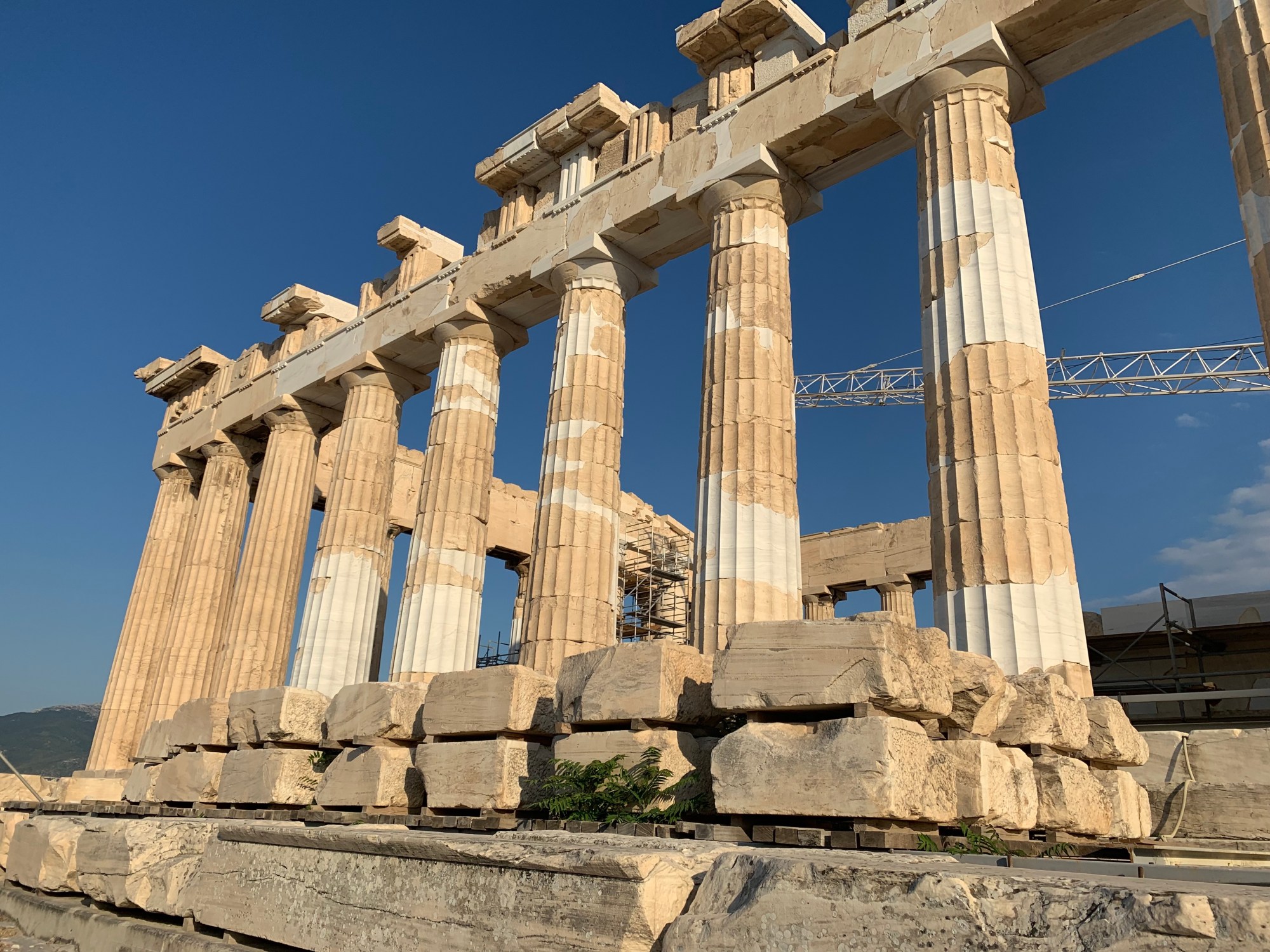
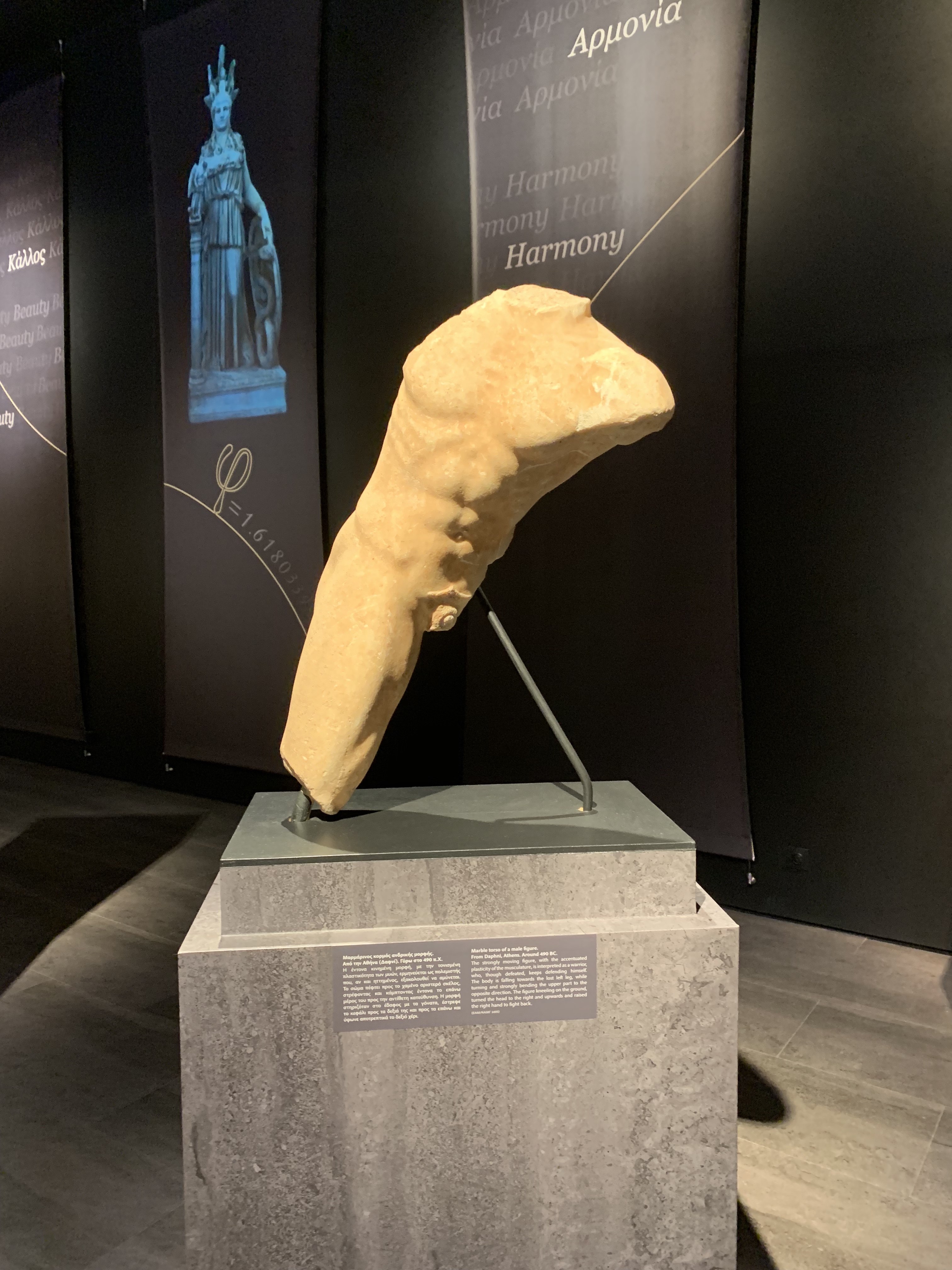
I decided to name the blog “Chiasmos,” after visiting the Acropolis Museum during my first few days in Athens. One panel in the museum explaining the history of classical representational art read :
“They abandoned the seemingly rigid stance of
the human figure and transferred the weight of the body onto a single leg.”
For some reason, this sentence stuck with me. The term for this artistic
movement is called chiasmos, and became popular following the end of
the Greco-Persian War in 449 BC when there was a push to have art convey the heroic spirit of the Grecian warrior.
The more I looked into the etymology, the more interested I became. Chiasmos, or chiasmus / chiasm comes from the Greek word χιάζω (chiázō), meaning “to shape like the letter x.”
In addition to being an artistic term, it is also a rhetorical device — the OED defines it as “a grammatical figure by which the order of words in one of two parallel clauses is inverted in the other.” Unlike antimetabole, the words are not identical, just similar.
Here are a couple examples I found online:
But O, what damned minutes tells he o’er
Who dotes, yet doubts; suspects,
yet strongly loves.
—Shakespeare, Othello 3.3
By day the frolic, and the dance by night.
Literary chiasmos was popular in the ancient world, where it was
used to stress the balance of order in texts such as the Bible, Quran, and the
Book of Mormon.
I like how the term exists in both literature and visual art — it encapsulates humankind’s love of symmetry and order, especially in our creative
representations of life. I’ve been keeping the term in my head as a travel and move between Christian, Muslim and Jewish cultures. These worlds are not identical, but reiterations and alternate representations of the same, familiar concepts. Different versions of god, different ways and words to reach him. I’m finding that anything foreign and unfamiliar in the beginning becomes banal with proximity.
The balancing act performed on the vastest stages of human history continues into our own small, specific lives. The entire weight of the body moves onto one leg. This is what I’m thinking about, and what I have been thinking about since reading that panel. Perhaps it’s the word that will tie this whole month of travel together.
 Chiasmos